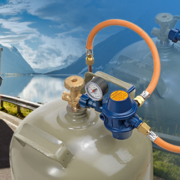
Why do I need a pressure regulator on gas cylinders?
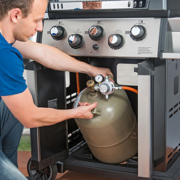
No gas barbecue operates correctly without a pressure regulator. The gas heater in a motorhome or caravan is ineffective without a pressure regulator; the same applies to a roasting burner, cooker, radiant heater or heating appliance – and the list could go on almost endlessly. Without a gas pressure regulator, also known as a pressure controller, connected to the gas cylinder, hardly any gas appliance will function.
It’s clear that in most cases, the gas cylinder and especially the appliance itself are the main focus for operators of liquefied gas systems. How many burners do I need to switch on to maintain a consistent 200 degrees on the gas barbecue? How long does the gas heater take to warm up the caravan or motorhome? Can I heat my patio with an infrared radiant heater during cooler temperatures?
You are currently viewing a placeholder content from Youtube. To access the actual content, click the button below. Please note that doing so will share data with third-party providers.
The heart of the system
Almost all applications have one thing in common: if there is no pressure regulator on the gas cylinder, the system will not work – or is not even permitted to be operated. Even though the pressure regulator may not be as prominent in public perception as the gas cylinder or the gas appliance, it is in fact the true heart of any liquefied gas system. And we’re not just saying that because we manufacture such pressure regulators!
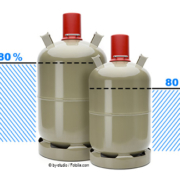
When the valve on the gas cylinder is opened, propane, butane or a mixture of the two escapes in gas form – and completely uncontrolled. At an ambient temperature of around 20 degrees Celsius, the pressure in the gas cylinder is approximately 7 bar. At this pressure, the liquefied gas “shoots” out of the valve and could theoretically flow directly to the end appliances such as a gas barbecue, gas heater or radiant heater.
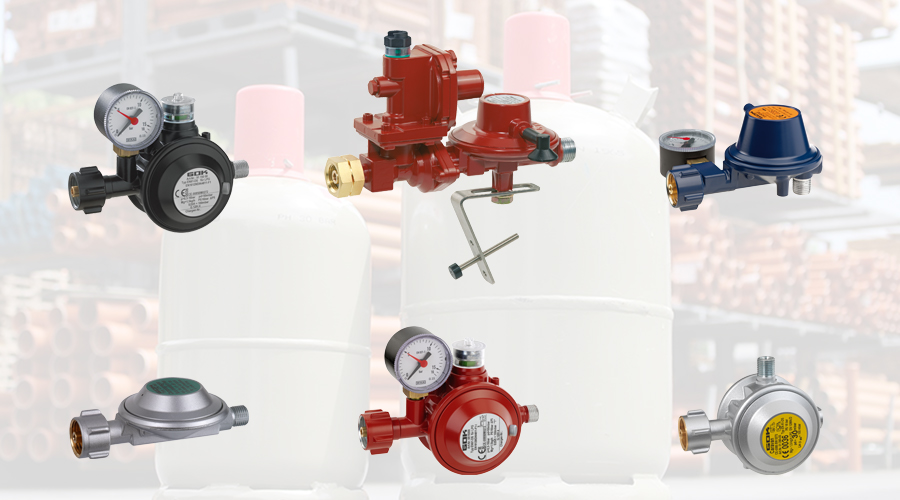
There is a wide range of different pressure regulators available for direct use on gas cylinders. The appropriate pressure regulator depends on several factors, such as the intended application, outlet pressure, cylinder size, required performance and more.
Consistency = better results
This is a problem, even though manufacturers could theoretically design appliances for such pressure levels. More critical, however, is the fact that the appliances do not tolerate constant changes or fluctuations in inlet pressure. For example, if the outside temperature rises due to sunlight, the cylinder pressure increases too. As a rule of thumb for good end results: the more consistent the inlet pressure, the better the gas appliance performs.
And this is where the pressure regulator comes into play. First of all, the fitting reduces the cylinder pressure to a standard level – typically 30 or 50 mbar in this country. Furthermore, the pressure regulator maintains this value consistently at the specified outlet pressure, taking a small tolerance range into account.
What unregulated pressure means
Here’s why these functions are important, using the fictional examples of a gas barbecue and a gas heater:
a) Gas barbecue
If the pressure at the gas barbecue were to fluctuate too much, it would have unpleasant effects on the food being grilled. The gas pressure has a direct influence on the gas flow rate. In other words: higher pressure means higher performance. Although the basic settings on the gas barbecue remain unchanged, the temperature inside the barbecue could be 110 degrees at one moment and 150 degrees just a few minutes later.
This would be especially problematic for so-called “low & slow” dishes, where precise temperature control is essential. Temperature fluctuations of 40 degrees would spell disaster for some brisket or pulled pork dishes.
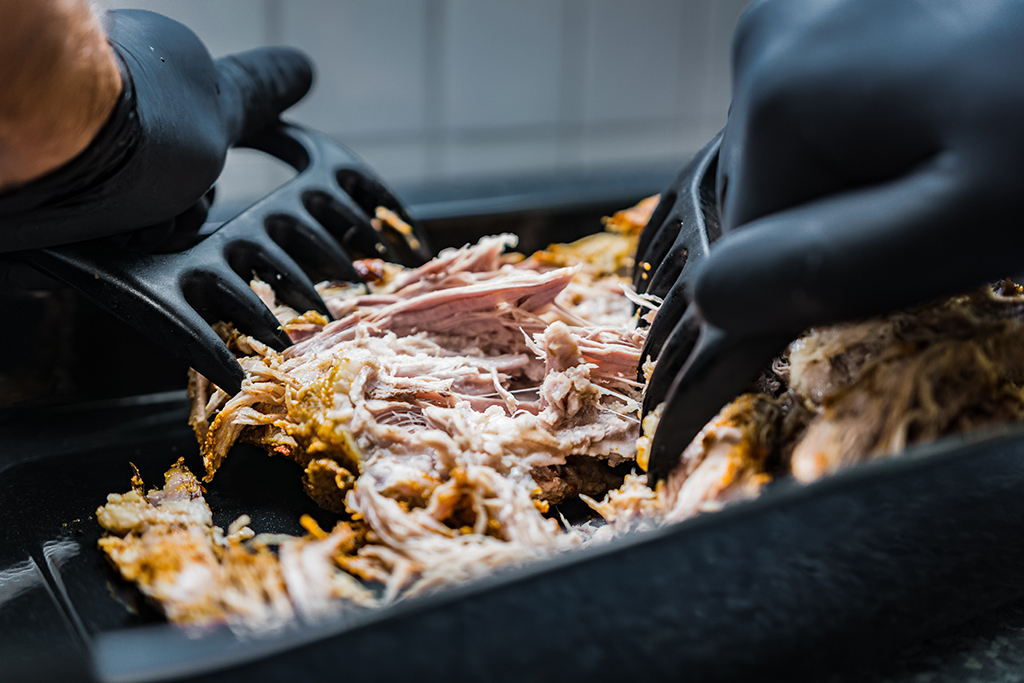
Without a pressure regulator, your chances of a successful pulled pork are close to zero!
b) Gas heater
The gas heater also relies on a constant supply of gas. Let’s say a camper has set the heating in their motorhome or caravan to maintain a cosy 22 degrees Celsius inside. If the cylinder pressure drops – for example, because outside temperatures fall drastically – the gas heater may no longer achieve 22 degrees, but perhaps only 19 degrees.
Campers would have no reliability and would constantly need to adjust the gas heater to match the changing daily conditions.
Pressure regulator ensures safety
That’s precisely why it is so important that a gas pressure regulator ensures reliability and consistency in liquefied gas systems. We therefore believe it’s not an exaggeration to describe the pressure regulator as the heart of the liquefied gas system.
In addition to the functions mentioned above, some pressure regulators also provide a safety function. Many regulators contain various integrated safety devices to protect people and the environment in the – fortunately – rare “worst-case scenario”.
For example, anyone operating the liquefied gas system while driving a motorhome or caravan will find a so-called crash sensor with pendulum from GOK in the gas pressure control system.

The crash sensor with pendulum developed by GOK is an integral part of the Caramatic DriveOne or Caramatic DriveTwo gas pressure control system. It protects campers in the event of an accident involving the leisure vehicle.
Important for barbecues and gas hobs
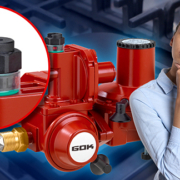
Many barbecue experts use the special pressure regulator Grillregler PRO from GOK, which features an integrated excess pressure safety device (S2SR). In the event of dangerously high overpressure, it protects not only the barbecue from damage but also the users themselves.
Anyone wishing to use a gas hob or gas cooker indoors – whether for private or commercial purposes, such as in the catering industry – requires a pressure regulator with two safety components. Firstly, it must have an integrated excess pressure safety device (S2SR); secondly, a thermal cut-out device (TAE) is also required.
You are currently viewing a placeholder content from Youtube. To access the actual content, click the button below. Please note that doing so will share data with third-party providers.
Summary
So, there’s no way around using a pressure regulator – at least not in most applications involving liquefied gas cylinders – and without one, many gas appliances would simply break. The fitting ensures that the uncontrolled pressure from the gas cylinder is supplied to the appliance at a constant and usable level. No gas barbecue, gas cooker or gas heater functions properly without gas pressure regulation, which is why it’s fair to say that the pressure regulator is the heart of many liquefied gas systems – even if it’s often not really visible.
FAQ’S
Why is a pressure regulator necessary for gas cylinders?
Without a pressure regulator, LPG exits the cylinder with a high and fluctuating outlet pressure (around 7 bar at 20 °C). The regulator reduces this to a constant required level (e.g. 30 mbar), ensuring gas appliances operate reliably and safely.
What happens if no regulator is used?
Gas appliances like barbecues or heaters would be supplied with uncontrolled high pressure, causing major temperature fluctuations or malfunctions – and creating a safety hazard.
How does a pressure regulator ensure constant performance?
It maintains a steady outlet pressure regardless of fluctuations in cylinder pressure (e.g. due to temperature changes). This enables stable temperatures when barbecuing or heating.
What is the standard outlet pressure?
In Germany, typical operating pressures are 30 mbar (e.g. in motor caravans), less commonly 50 mbar – the selection depends on the appliance and applicable standard.
What factors influence the choice of the right pressure regulator?
Key criteria include the application, required outlet pressure, cylinder size and gas flow rate (capacity). Selection is based on type, capacity (kg/h) and the correct nominal pressure.