Gas supply in Poland: What motor home and caravan campers need to know
Anyone travelling through Poland with a motor caravan or caravan generally needs to worry far less about gas supply than expected. LPG is widely used in the country, the infrastructure is well developed and many systems are compatible with German standards. Nevertheless, there are a few country-specific particularities that campers should be aware of in order to travel safely and in a relaxed manner.
Whether for cooking, heating or running the refrigerator: a reliable gas supply is essential when camping. Especially when travelling abroad, however, there is often uncertainty – which gas cylinders fit, where can replacements be obtained and what is actually permitted? Poland is regarded as a true LPG country, which is fundamentally beneficial for motor caravan and caravan travellers. Autogas (LPG) is available almost nationwide, and conventional gas cylinders are, in many respects, comparable with German models.
Nevertheless, it is worth taking a closer look before travelling. Because even if many things are similar, Poland has its own practices when it comes to cylinder exchange, filling gas cylinders or refuelling LPG. This article shows what you should pay attention to regarding gas supply in Poland, which solutions have proven themselves in practice and how you can start your journey well prepared – and above all safely.
Important basics of gas supply in Poland
Without a functioning gas supply, little works when camping – whether it is making coffee in the morning, heating on cool evenings or operating the refrigerator. The good news for travellers to Poland: gas supply is generally uncomplicated and well organised. Poland is one of the countries with a particularly high use of LPG, especially in road traffic. Many passenger cars run on autogas, and accordingly the network of LPG filling stations throughout the country is very dense.
For campers, this means above all one thing: security of supply. Anyone travelling with a motor caravan or caravan will find opportunities to obtain LPG almost everywhere in Poland – either by refuelling a permanently installed LPG tank or a refillable gas cylinder, or by exchanging conventional gas cylinders. Unlike in some southern European countries, there are no exotic cylinder connections or hard-to-find special solutions in Poland.
Despite this favourable starting position, practice differs in some respects from the situation in Germany. For example, cylinder exchange works according to a different system, and there are also special aspects to consider when filling cylinders or handling autogas. However, anyone who is familiar with these basics and prepares their trip accordingly can travel through Poland very comfortably – even away from major cities or tourist hotspots.
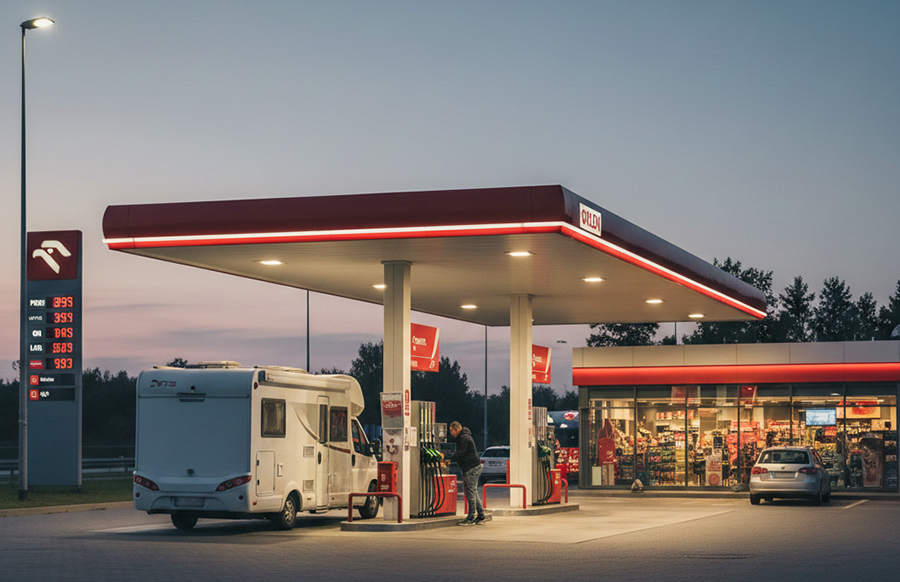
Poland has an excellently developed infrastructure of filling stations with LPG pumps.
Image generated with the help of Google Gemini
Adapters and connections: How to connect to Polish gas cylinders
In many European countries, gas-cylinder connections differ significantly – which can quickly lead to uncertainty when travelling. Poland, however, is a pleasant exception in this respect. The commonly used 5 kg and 11 kg gas cylinders in Poland largely correspond to German propane cylinders in terms of design and valve connection. This means that German pressure regulators with a W21.8 × 1/14″ left-hand thread (G.12) can generally be mounted directly onto Polish gas cylinders.
A country-specific cylinder adapter, such as those required in Italy or France, is therefore not necessary for Poland. Anyone travelling exclusively within Poland can usually manage without problems using their usual regulator assembly or high-pressure hose lines. Nevertheless, it can be useful to carry a universal European adapter set – especially if the trip passes through additional countries or spontaneous route changes are planned.
One point campers should note is the design of Polish gas cylinders. These often have a slightly larger or differently shaped protective collar around the valve. In narrow gas-cylinder lockers, this can mean that the cylinder is difficult to insert or does not sit optimally. It is therefore advisable to briefly check before purchasing or exchanging a Polish cylinder whether it fits into the existing gas locker.
Important for travel planning: Polish gas cylinders are part of a national exchange system and cannot be returned in Germany. Anyone who takes over a Polish cylinder should therefore either empty it completely during the trip and exchange it locally, or keep it for future trips to Poland. Technically, the connection is uncomplicated – organisationally, however, dealing with foreign cylinders requires some planning.

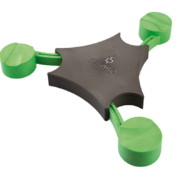
Even though the same connection as in Germany is often used in Poland, an adapter set such as the Euro-Set D Professional from GOK can be useful – for example if the trip passes through additional countries.
Filling gas cylinders in Poland: What is permitted – and what is not
When travelling abroad, there is often uncertainty regarding the filling of gas cylinders – including in Poland. As a basic rule, filling loose, conventional gas cylinders at standard LPG filling stations is considered critical from a safety perspective. Classic 5 kg or 11 kg gas cylinders generally do not have an automatic 80% fill-limiting device. Overfilling can, in the worst case, lead to dangerous situations.
There is no clear legal regulation in Poland comparable to that in Italy. In practice, however, many filling stations – especially large chains and urban stations – refuse to fill loose gas cylinders. Refuelling is permitted and technically intended only for permanently installed LPG tanks or approved refillable gas cylinders with an integrated 80% fill-stop device.
Nevertheless, campers report that filling conventional gas cylinders is possible in some places in Poland, for example at smaller, independent LPG stations or specialised filling businesses. There, the filling quantity is often controlled by weight. It is important that the cylinder is as empty as possible and that filling is carried out professionally. From a safety perspective, however, it is still recommended to use such offers very cautiously and to refrain from them in case of doubt.
Anyone who wants to be on the safe side relies in Poland on a refillable gas cylinder or a permanently installed LPG tank. These solutions are designed for refuelling at LPG pumps, have the necessary safety devices and also offer the advantage of excellent availability throughout the country. In this way, legal grey areas are avoided and gas supply can be handled just as conveniently as refuelling conventional fuel.

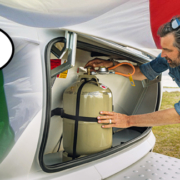
So-called refillable gas cylinders may be filled at LPG filling stations in Poland provided they have an integrated 80% fill stop.
LPG refuelling with a motor home or caravan: Which adapter is mandatory in Poland?
Poland is one of the most autogas-friendly countries in Europe. For campers with a permanently installed LPG tank or a refillable gas cylinder, this is a clear advantage, as LPG filling stations can be found almost everywhere – even away from larger cities. Anyone using this form of supply can handle their gas system on the road almost as easily as refuelling conventional fuel.
However, the correct tank adapter is essential. In Poland, the so-called DISH connection, also known as the cup connection, is predominantly used at autogas pumps. This differs from the ACME connection commonly used in Germany. Travellers from Germany therefore generally require an ACME-to-DISH adapter in order to refuel at Polish LPG filling stations.
The adapter is screwed or inserted onto the filler neck before refuelling, after which the pump nozzle can be attached and locked. The actual refuelling process then hardly differs from that in Germany: after the automatic fill stop, the pump nozzle is released and the adapter removed again. For trips through several countries, a complete tank-adapter set is recommended, covering DISH as well as other common connections.
Good to know: many Polish filling-station operators are very familiar with the topic of autogas and are often happy to help with questions or uncertainties. Nevertheless, you should not rely on a suitable adapter always being available on site. Anyone who travels prepared and carries the correct DISH adapter will remain flexible and independent when refuelling LPG in Poland.
Gas quality in Poland: Propane, butane and the use of gas filters
Even with good availability, gas quality plays an important role in the safe and trouble-free operation of the gas system. In Poland – depending on the supplier and intended use – both pure propane and propane–butane mixtures are offered. For campers, this distinction is relevant because the two gases differ primarily in their cold-temperature performance.
Propane remains gaseous even at very low temperatures down to around –42 °C and is therefore ideally suited for use in autumn and winter. Butane, on the other hand, hardly vaporises around freezing point. In the colder months, propane-rich gas or pure propane is generally offered in Poland, ensuring reliable operation of heating systems and cookers. In summer months or when using autogas, mixtures with a higher butane content may also occur.
Another aspect is the purity of the LPG. While very high quality standards apply to autogas in Germany, the composition and proportion of residues can vary abroad. Such oily or solid residues can accumulate over time in pressure regulators, valves or jets and impair the function of the gas system.
The use of a gas filter provides a remedy – either for systems with LPG tanks or for conventional cylinder systems. The Caramatic ConnectClean gas filter is installed upstream of the pressure regulator and filters impurities from the gas flow before they reach sensitive components. Especially for campers who regularly refuel LPG abroad or travel frequently, a gas filter is a sensible addition to the gas system. It increases operational safety, protects the components and can help reduce maintenance effort and malfunctions.
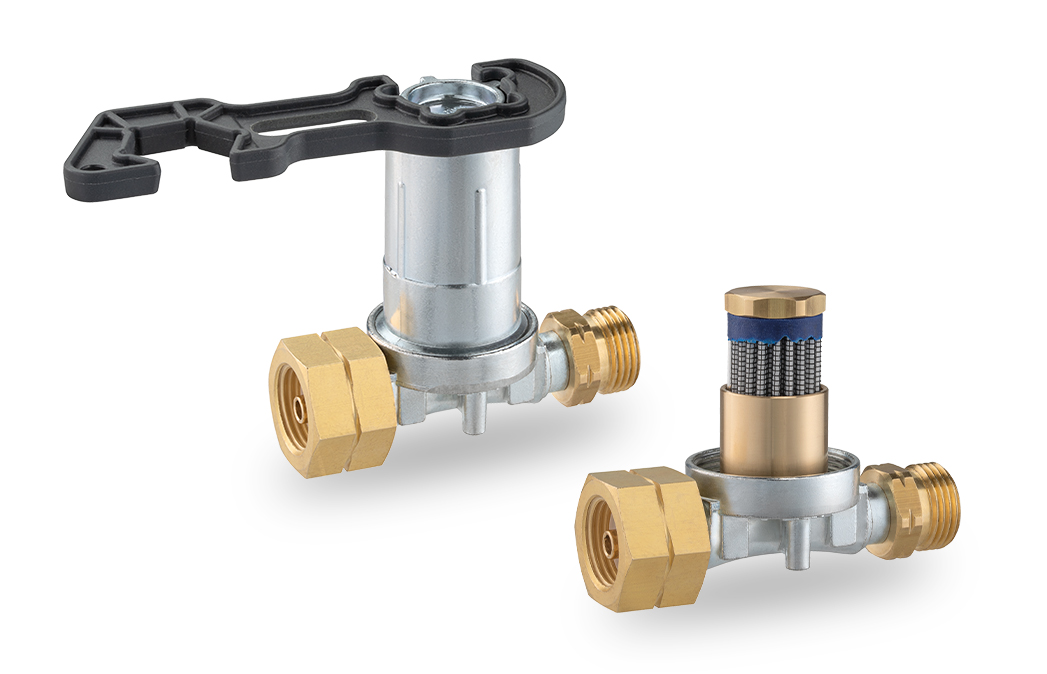
Autogas available at LPG filling stations generally does not have the same quality and purity as LPG filled into gas cylinders. Gas filters from GOK protect the connected fittings and gas appliances.
Differences in gas supply: High season vs. low season
How uncomplicated gas supply is in Poland also depends on the time of travel. During the high season in spring and summer, most campsites are open, contact points are easily accessible and information on obtaining gas is readily available. In tourist regions, campers often receive information at reception on where gas cylinders can be exchanged or filled – some sites even offer corresponding services themselves.
In the low season, particularly in autumn and winter, gas planning requires a little more preparation. Many campsites close outside the summer season or significantly reduce their services. As a result, simple exchange options are no longer available, and contacts on site are not always accessible. Anyone travelling during this time should start with full cylinders and obtain information in advance about possible filling stations or LPG filling stations along the route.
Another difference concerns gas consumption. In the colder months, demand increases significantly due to additional heating requirements. At the same time, temperatures in parts of Poland are often lower than in Central Europe, making the use of propane-rich gas particularly important. In the high season, on the other hand, many campers get by with comparatively little gas, as heating systems are rarely required.
Regardless of the time of year, a realistic assessment of personal consumption and a small buffer in gas reserves provide additional safety. Anyone who plans accordingly remains flexible and well supplied even under changing conditions.
Using gas while driving: Why a crash sensor is advisable in Poland
Many campers ask themselves before travelling abroad whether they are allowed to operate their gas system while driving – for example to run the refrigerator on gas or to heat in cool temperatures. For Poland – as generally within the EU – the following applies: if the gas system is used while driving, a suitable safety device is required. This includes in particular a crash sensor, which automatically interrupts the gas flow in the event of an accident or strong impact. Poland strongly aligns itself with well-known German safety requirements, such as DVGW Worksheet G 607.
The focus is always on safety. A crash sensor prevents uncontrolled gas escape in the event of an accident and thus significantly reduces risk. Anyone equipped with a correspondingly designed gas system can operate gas appliances while driving. GOK offers various models and systems for this purpose, in which a crash sensor is an integral component. Here is an overview: https://gok.de/en/LPG-systems-leisure-time/Gas-supply-while-driving/.
Regardless of this, the following also applies in Poland: at filling stations, on ferries or when passing through certain tunnels, gas cylinders must be closed. If no crash sensor is installed, cylinders should generally remain closed while driving and gas appliances should only be operated when stationary.
You are currently viewing a placeholder content from Youtube. To access the actual content, click the button below. Please note that doing so will share data with third-party providers.
Gasprüfung im Ausland: Pflicht oder freiwillige Sicherheit?
Before travelling abroad, many campers ask themselves what significance the gas inspection has. In Germany, the periodic inspection of the LPG system according to DVGW Worksheet G 607 is mandatory for motor caravans and caravans and is stipulated in Section 60 of the Road Traffic Licensing Regulations (StVZO). In Poland, by contrast, there is no separate legal inspection requirement equivalent to the German G 607.
However, this does not mean that the issue should be neglected. In Poland, many operators, inspectors, campsites and specialist companies also orient themselves towards the well-known German safety standards. A regularly inspected gas system reduces the risk of leaks, increases operational safety and ensures that heating systems, cookers and refrigerators function reliably.
In practice, campsites – especially those with an international clientele – may request proof of a current gas inspection. In the event of damage, documented inspection can also be relevant, for example when dealing with insurance companies. It is therefore advisable to have the gas system checked before a longer trip abroad and to carry the relevant documentation.
In short: even though there is no formal inspection obligation in Poland, gas inspection is an important building block for safe travel. Anyone who has their system regularly serviced and inspected benefits above all from increased safety and reliability while travelling.

No formal requirement in Poland, but still a key element of safe travel: gas inspection and entry in the yellow booklet!
Conclusion: Well prepared for camping in Poland
Poland is a very gas-friendly country for travelling with a motor caravan or caravan. The good availability of LPG, compatible cylinder connections and a dense network of LPG filling stations ensure that campers are usually well supplied in practice. Anyone who familiarises themselves in advance with the country-specific particularities can make relaxed use of the advantages of this infrastructure.
Decisive is realistic planning: the right solution for gas supply – whether a conventional gas cylinder, a refillable gas cylinder or a permanently installed LPG tank – should match your own travel profile. Complemented by suitable adapters, a conscious approach to gas quality and sensible safety devices such as a crash sensor, a high level of safety and comfort is achieved.
Anyone who has their gas system regularly inspected and does not rely on half-knowledge will travel reliably and safely in Poland as well. This leaves the focus on what really matters: relaxed travel, flexible stages and the diverse landscapes and regions of Poland.
FAQ: Gas supply in Poland – frequently asked questions from campers
Can I use my German gas cylinders in Poland?
Yes. Polish 5 kg and 11 kg gas cylinders are technically compatible with German cylinders. The pressure-regulator connection is identical. When exchanging cylinders, however, it should be noted that Polish cylinders cannot be returned to the German deposit system.
Do I need special gas-cylinder adapters for Poland?
No special adapter is required to connect to Polish gas cylinders. For refuelling LPG at autogas filling stations, however, a DISH adapter is required, as this connection is standard in Poland.
Is filling loose gas cylinders at LPG filling stations in Poland permitted?
Filling conventional gas cylinders without an 80% fill-limiting device is not intended for safety reasons and is rejected by many filling stations. Refuelling is permitted and recommended exclusively for refillable gas cylinders or permanently installed LPG tanks.
What is the gas quality like in Poland?
Gas quality is generally good. In the colder months, propane-rich gas is usually offered, which functions reliably even at low temperatures. Autogas may contain residues or contaminants depending on the supplier, which is why the use of a gas filter can be advisable.
May I operate the gas system while driving in Poland?
Yes, provided that a suitable safety device in accordance with DIN EN 1949 is installed, such as a pressure regulator with crash sensor and hose-rupture protection. This requirement applies EU-wide and is also applied in Poland. Without a crash sensor, gas cylinders must remain closed while driving.
Is a gas inspection required for Poland?
There is no statutory inspection obligation comparable to Germany’s in Poland. Nevertheless, regular gas inspection is strongly recommended, as it increases safety and may be relevant on campsites or in the event of damage.
Where can I reliably obtain gas in Poland?
LPG filling stations are available almost nationwide. Gas cylinders can be obtained via exchange systems, specialised filling companies or at some campsites. In the low season, slightly more generous gas-reserve planning is recommended.