
If you have a pressure regulator from GOK with both UPSO and OPSO integrated, your LPG system is monitored with the highest level of safety. Why? We explain it in this blog article.
How does the safety device OPSO/UPSO work?
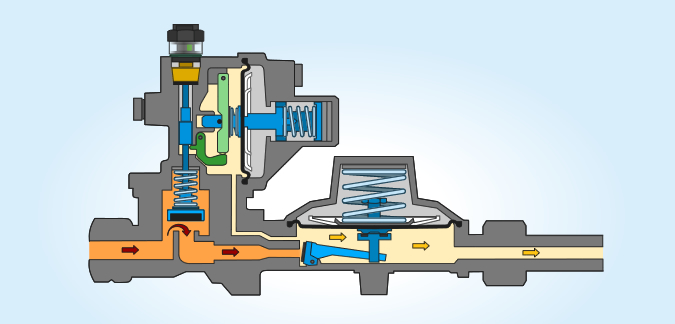
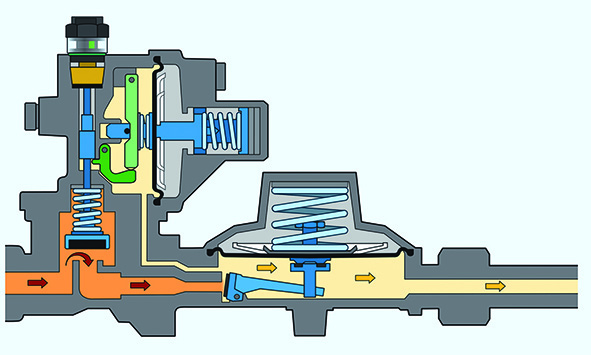
If you are looking for the maximum safety level for the most important fitting for LPG systems, OPSO/UPSO should be a part of it. These are a combination of two safety devices with different operating principles. One offers protection from leaks, and the other protects against overpressure in the supply system.
First of all, the long form to explain the abbreviations:
- OPSO means Over-Pressure Shut Off; it is freely translated as an overpressure closing unit.
- UPSO means Under-Pressure Shut Off; it is the opposite part of the OPSO, i.e. a vacuum closing unit.
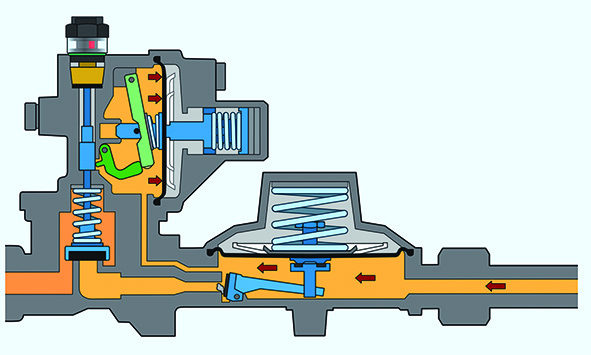
Both are safety devices that are integrated in special pressure regulator models from GOK. However, while the OPSO, previously known as an SAV (safety shut-off valve), may also be the sole safety device in the pressure regulator, the UPSO does not exist alone. This is because: It is combined with the OPSO.
OPSO function
As you can tell from the long form of OPSO, this safety device in LPG systems protects against dangerous overpressure. This means: If the outlet pressure of the pressure regulator exceeds a defined maximum, a locking mechanism blocks the gas flow.

UPSO function
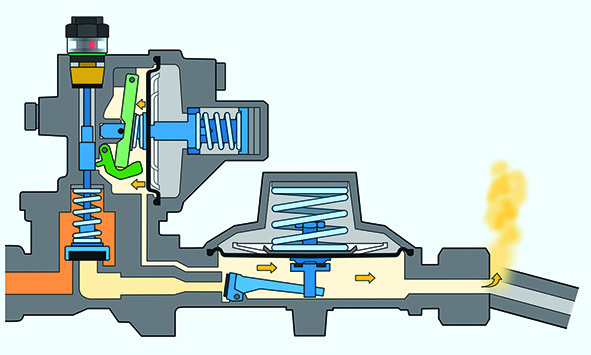
The gas flow is also shut off by the UPSO, but for a different reason. In order for the safety device to respond, the pressure produced downstream of the pressure regulator must be too low. This may be the case, for example, if an LPG line laid in the ground is severely damaged during construction work.
The under-pressure shut-off safety device monitors the outlet pressure constantly, as does the OPSO.If the pressure drops below the defined minimum, the safety valve blocks the gas flow. The specialist can only release the pressure reducer once the cause of the vacuum has been detected and rectified – another similarity with the OPSO.
Contracting a specialist
Normally, you do not have to replace the pressure regulator if one of the two safety devices has responded – unless, of course, the pressure regulator is responsible for the malfunction itself.Therefore: Have the system inspected by a specialist. If the cause is not with the pressure regulator itself, the specialist fitter can quickly make the fitting ready for operation.
In summary, the combination of the two safety devices offers comprehensive protection, as neither over-pressure (OPSO) nor vacuum (UPSO) represent specific hazards, for example, due to contamination or line damage.
Image gallery


You might also find this interesting




This blog will never ask members of the public or unqualified persons to make changes to or fiddle around with technical systems themselves.
In accordance with the Industrial Safety Regulation (BetrSichV), a qualified person must take care of a system which requires monitoring.
A qualified person is someone who has the specific specialist knowledge required. This knowledge is gained by way of a professional apprenticeship, corresponding professional experience or current occupational activity.
Please note that the texts are based on information, regulations and standards for Germany. Please always check the rules and regulations in the relevant country of destination and consult specialists if necessary.