
GOK shows you how to check your LPG cylinder system for leaks as the operator. Leak detector spray or the pressure gauge of the pressure regulator are used.
Inhaltsverzeichnis
GOK shows you how to check your LPG cylinder system for leaks as the operator. Leak detector spray or the pressure gauge of the pressure regulator are used.
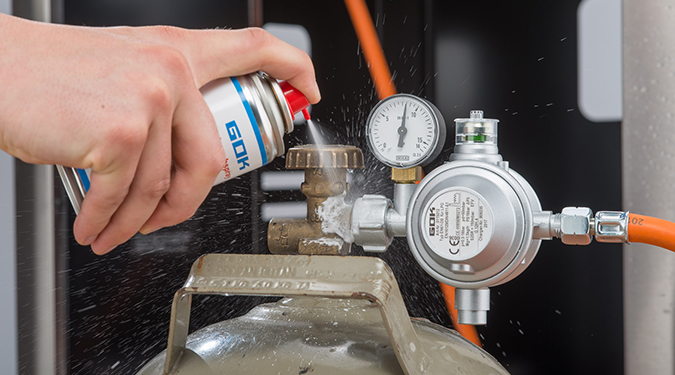
A simplified leak-tightness check of the cylinder system operated with LPG must be carried out by the operator of a piece of gas equipment, such as barbecue, outdoor heater or radiant heater before each use and after a cylinder replacement.
Of course, all individual components of the system, such as LPG cylinders, pressure regulators, hose assemblies, excess flow devices and gas equipment must be connected – if this is not already the case.
You must then perform the following steps to check the leak-tightness of the LPG system:

If bubbles form, you must re-tighten all connections. If bubbles continue to form after this, you must not put the gas equipment into operation under any circumstances, but must replace the leaky component immediately.
Please refer to the operating manual of the gas equipment manufacturer. There you can also find information on the leak check.
In the commercial sector – and increasingly in private – more and more operators are using a pressure regulator with pressure gauge. This helps to check for leak-tightness in an LPG system easily and quickly. The following steps should be followed:

The indicated pressure must not decrease during the testing time, showing that the LPG cylinder system is leak-tight. If the pressure drops during the test time, you should spray all detachable connections with leak detector spray as described above. This allows you to locate the leak.
This blog will never ask members of the public or unqualified persons to make changes to or fiddle around with technical systems themselves.
In accordance with the Industrial Safety Regulation (BetrSichV), a qualified person must take care of a system which requires monitoring.
A qualified person is someone who has the specific specialist knowledge required. This knowledge is gained by way of a professional apprenticeship, corresponding professional experience or current occupational activity.
Please note that the texts are based on information, regulations and standards for Germany. Please always check the rules and regulations in the relevant country of destination and consult specialists if necessary.


