The Senso4s level gauge for gas cylinders is a very accurate monitoring instrument to prevent a gas cylinder suddenly becoming empty. We have summarised in this article what needs to be observed during start-up and during operation.
Post Views:123
The Senso4s level gauge for gas cylinders is kept very simple in terms of handling. However, in customer consultation meetings, we have identified a few points which were unclear before the purchase or caused measurement errors during use. We therefore prepared this article and answered the FAQs.
Before start-up
The Senso4s is a gas cylinder scale, so to speak, which provides the filling level and, for example, a consumption forecast in a smartphone or tablet app via algorithm. During operation, in addition to the filling and tare weight of the gas cylinder, it also carries the weight of the pressure regulator and the gas hose.
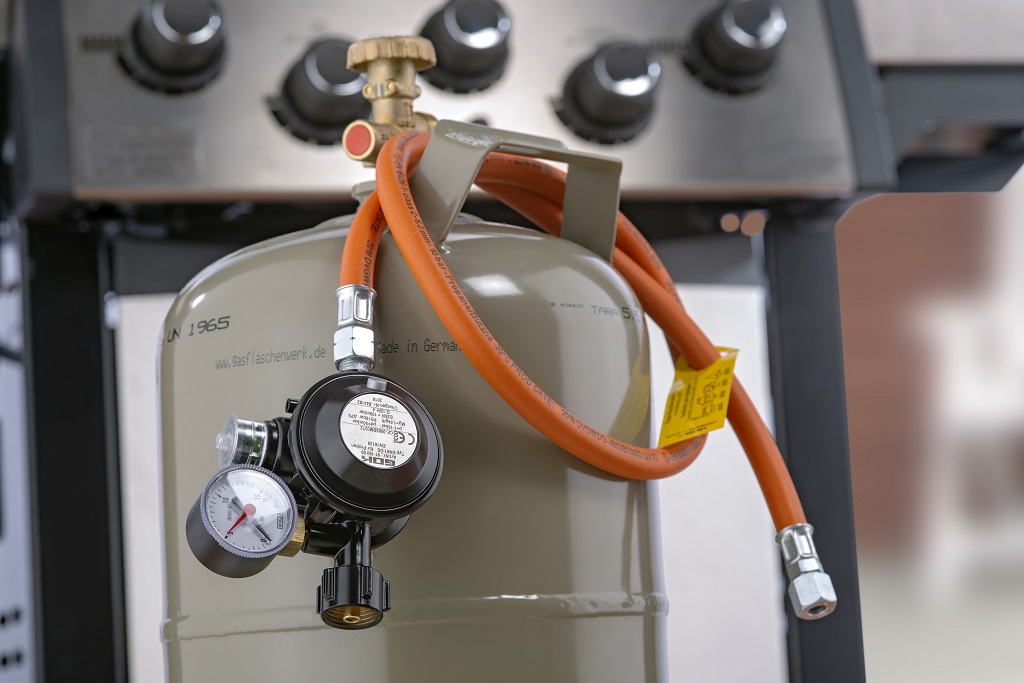
This is why it is important that you attach the pressure regulator and hose assembly to the gas cylinderbefore you start up the Senso4s. However, you do not have to calculate the weight of the fittings separately. An average value is already saved in the algorithm.
Before calibrating the Senso4s, screw the pressure regulator and hose assembly onto the gas cylinder. This helps you avoid measurement inaccuracies or errors.
During installation
The associated app provides you with the exact steps during the initial start-up. These are three simple steps after you have adjusted the Senso4s to the appropriate size:
Disconnect the gas cylinder from the Senso4s
Enter the filling and tare weight of the gas cylinder
Place the gas cylinder back on the Senso4s and click “OK”
Please observe these steps carefully, as otherwise measurement errors may occur.
No objects on the gas cylinder
As already mentioned at the beginning, the Senso4s is based on a weighing principle. Therefore, if you place objects on the gas cylinder before or during installation or during normal use, this leads to inaccurate measurements or even measurement errors. Therefore, please do not place any barbecue tongs, torches or leak detector sprays on it.
Observe the surface
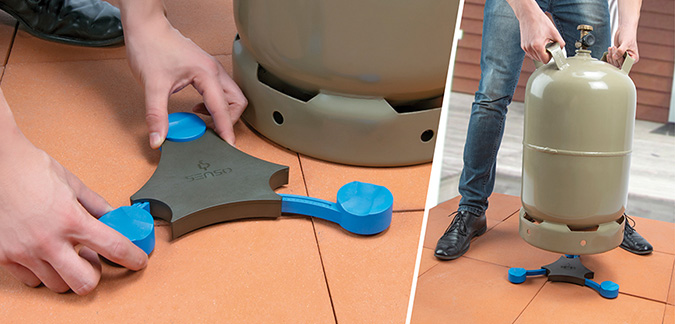
Please be aware before purchasing it that the Senso4s only works correctly permanently if it is on a level and solid surface. For example, if a foot of the Senso4s is located in a trough or even suspended in the air, no meaningful measurement result can be produced.
Examples of the best surfaces are plastic or wooden plates, concrete, asphalt and other flat and solid grounds. Ribbed plates, steel gratings or similar are rather unsuitable.
Particularly for caravans and motor caravans
If you want to use the Senso4s in the gas cylinder case of your leisure vehicle, you must observe the following.
Please do not leave the Senso4s under the gas cylinder while driving. Uneven driving conditions can lead to strong exertion of force on the sensor system of the Senso4s and in the worst case may lead to permanent damage to the device. Due to the following point, it is not possible to use the Senso4s while driving anyway.
Please do not tighten the safety belt in the gas cylinder case while using the Senso4s. This leads to inaccurate measurements or measurement errors. Regardless of this, you must of course tighten the belt before the journey, which in turn would make correct use of the Senso4s impossible while driving anyway, because the actual weight never burdens the device.
The Senso4s has a fixed measuring interval of 15 minutes. This means that the device carries out a measurement every quarter of an hour – even if there is no active Bluetooth connection with a mobile device.
Why every 15 minutes and not directly every second? First and foremost to save the batteries, so that they last for at least one year and you don’t have to replace them every week.
Power supply
As already mentioned, the Senso4s receives its required power from batteries. These are not included in delivery. However, these are the standard type of batteries, which everyone probably has at home: 3 x batteries type AAA.
Suitable gas cylinders
The Senso4s fits all commercially available gas cylinders with a base diameter between 18 and 32 centimetres. These are, for example, propane gas cylinders with a filling weight of 5, 8, 11 or 16 kilograms.
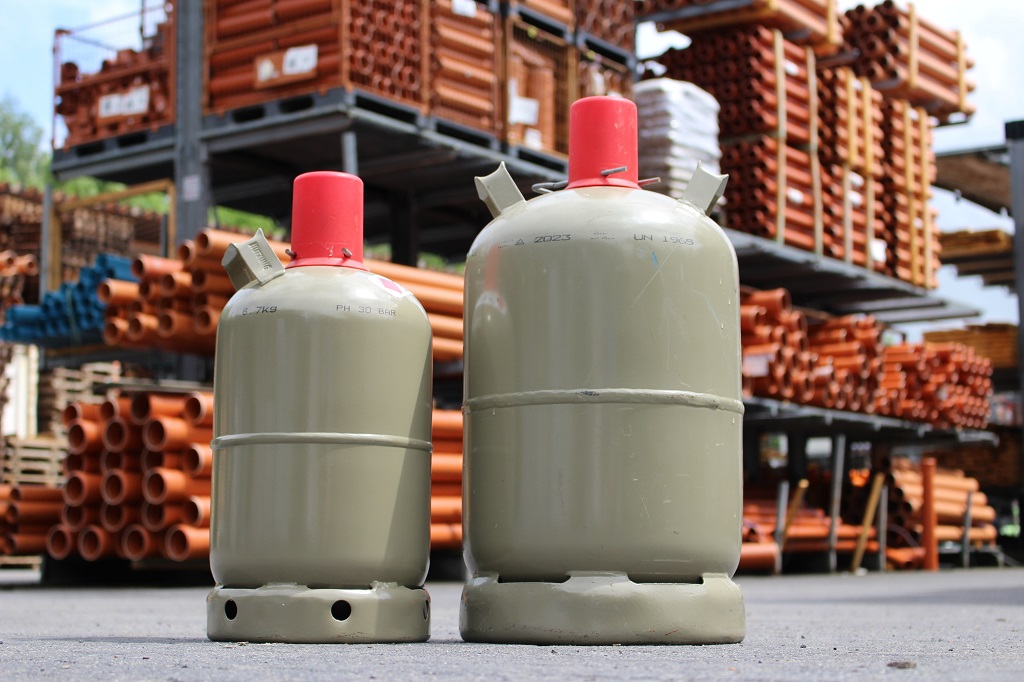
Two of the most commonly used propane gas cylinders in Germany which are definitely suitable for use with the Senso4s: the 5 (left) and 11-kilogram cylinder (right).
System requirement smartphone/tablet
It is important that the mobile device has at least standard Bluetooth 4.0 and an Android or iOS operating system.
Unsuitable locations
Of course, there are also restrictions on using the Senso4s. The level gauge must not
be kept in a humid or wet environment.
be kept in the gas cylinder case on boats.
be part of commercially used LPG systems.
be used in commercial or domestic multiple cylinder systems.
If you have any questions that we have not yet answered, please write us an email or give us a call.
The articles are written by specialist authors in the fields of LPG, fuel oil, liquid media, tank management and safety engineering, who contribute their expertise from product management, development, technical customer support, training and standardisation activities.
The members of the editorial team have many years of practical experience in the planning, application and further development of technical solutions for the safe supply of LPG and liquid fuels. Several authors are actively involved in specialist committees and working groups of the DVGW, DVFG and figawa, as well as in national and European standardisation committees. The team includes, among others, experts certified in accordance with G 607 and G 608, competent persons in accordance with the TRF, and specialists who contribute to the development and evaluation of technical regulations and industry standards.
In addition to providing information about GOK products and solutions, the editorial team focuses on sharing knowledge relating to safety, regulations, maintenance, operation and future technologies in the field of LPG and liquid media.
Share this post
Related articles
No results found.
You might also find this interesting
How does a PRV pressure relief valve work?
Camping & Leisure, Home & Commercial, Safety
Which pressure regulator do I need for which output?
Camping & Leisure, Grill & BBQ, Home & Commercial
How do I know when I need to replace the components of my LPG system?
Camping & Leisure, Grill & BBQ, Home & Commercial
Where can I find operating manuals for GOK products?
Camping & Leisure, Grill & BBQ, Home & Commercial, Tank & Liquid Media
From what length of hose assembly do I need an excess flow device?
Camping & Leisure, Grill & BBQ, Home & Commercial
Which pressure regulator connections exist for LPG cylinders in Europe?
Camping & Leisure, Grill & BBQ, Home & Commercial
How can I release an OPSO (SAV)?
Home & Commercial
What is an OPSO (SAV) and how does it work?
Home & Commercial
Does the pressure regulator gauge show the filling level of the LPG cylinder?
Camping & Leisure, Grill & BBQ, Home & Commercial
Does the gas have to be discharged out of the line before releasing the OPSO (SAV)?
Home & Commercial
How do I carry out a simplified leak check on an LPG cylinder system?
Camping & Leisure, Grill & BBQ, Home & Commercial
What is the heating value of media such as fuel oil, LPG and natural gas?
Home & Commercial, Tank & Liquid Media
This blog will never ask members of the public or unqualified persons to make changes to or fiddle around with technical systems themselves.
In accordance with the Industrial Safety Regulation (BetrSichV), a qualified person must take care of a system which requires monitoring.
A qualified person is someone who has the specific specialist knowledge required. This knowledge is gained by way of a professional apprenticeship, corresponding professional experience or current occupational activity.
Please note that the texts are based on information, regulations and standards for Germany. Please always check the rules and regulations in the relevant country of destination and consult specialists if necessary.