
The combination of uncontrollably leaking LPG and fire is an extremely explosive mixture. To protect the operator from worse, we offer the thermal cut-out device “T” (TAE). A special mechanism closes the gas supply if a certain temperature is exceeded.
What do I need a thermal cut-out device “T” (TAE) for?
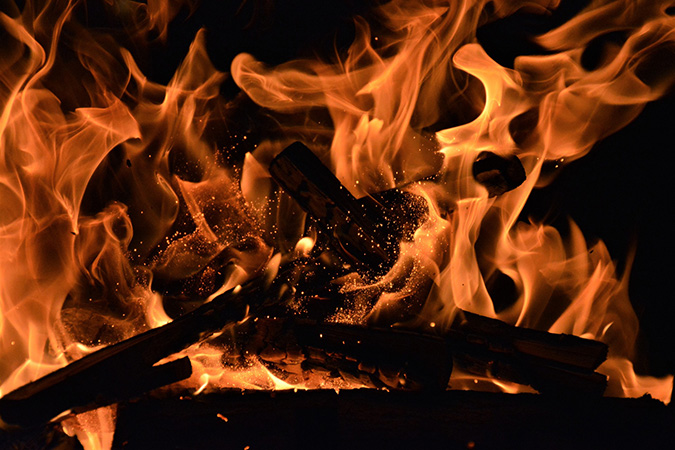
It is one of the worst scenarios you can imagine: The company hall or the private building is in flames and the operator cannot shut off the gas supply. The fire inevitably is about to reach the LPG system; the extent and damage would be devastating, if there was an explosion. A thermal cut-out device prevents the uncontrolled gas escape from the downstream fittings and protects people and the system from major damage.
The thermal cut-out device “T”, for short: TAE, is used upstream of various fittings, such as ball valves and screw-in compression fittings, as well as pressure regulators. The TAE is sometimes integrated into the system components, but can also be installed individually in the line (see product examples at the end of the article).
Melting point
The TAE works as follows: At a temperature of approx. 100 degrees Celsius, a soldering material inside the fitting begins to melt. Once the soldering material has passed into the liquid state, a pre-tensioned closing taper then triggers and interrupts the gas supply.
With this mechanism, for example, the operator of a cylinder system can prevent gas from escaping if components of an LPG system melt due to a fire.
Replacement after triggering
After the thermal cut-out device has tripped, the user must replace it. The closing taper cannot be re-tensioned afterwards.
Among other things, these products protect you from uncontrolled escape of gas, if, for example, a fire should break out:
You might also find this interesting


+for?)
+for?&description=&image=https://www.gok-blog.de/wp-content/uploads/2017/02/feuer-675.jpg)
This blog will never ask members of the public or unqualified persons to make changes to or fiddle around with technical systems themselves.
In accordance with the Industrial Safety Regulation (BetrSichV), a qualified person must take care of a system which requires monitoring.
A qualified person is someone who has the specific specialist knowledge required. This knowledge is gained by way of a professional apprenticeship, corresponding professional experience or current occupational activity.
Please note that the texts are based on information, regulations and standards for Germany. Please always check the rules and regulations in the relevant country of destination and consult specialists if necessary.