
According to the Technical Rules for Liquefied Petroleum Gas (TRF), you are allowed to use 5 and 11 kilogram LPG cylinders in buildings, including flats. GOK shows you what to look out for during installation.
Inhaltsverzeichnis
According to the Technical Rules for Liquefied Petroleum Gas (TRF), you are allowed to use 5 and 11 kilogram LPG cylinders in buildings, including flats. GOK shows you what to look out for during installation.

The things that installers and consumers must pay attention to when using LPG cylinder systems privately within the household are defined in the Technical Rules for LPG (TRF) from 2012. According to these rules, you may also use certain gas cylinders indoors, but with limitations.
The TRF allow the use of 5 and 11-kilogram cylinders in closed rooms. But even with these small cylinders, there is a limited quantity that you may keep in the building. You can have one in operation, and you can store a second one in the building, i.e. the residential unit. It doesn’t matter at all whether the stored cylinder is full to the brim or empty. Please note that only one LPG cylinder is permitted per room, and you must never store these in the following places:
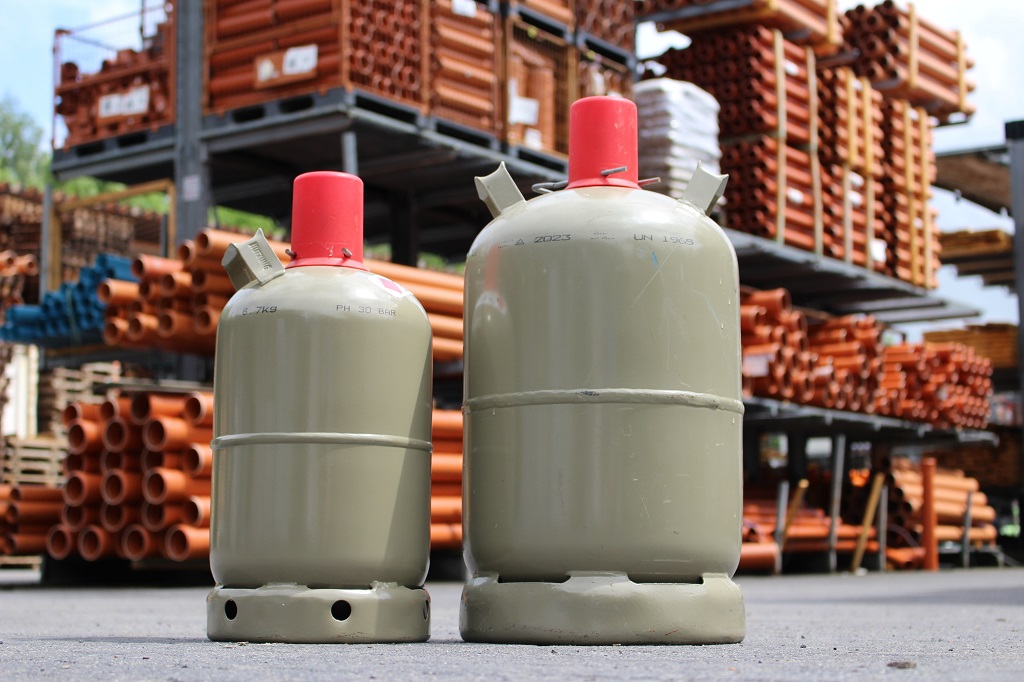
The 33-kilogram cylinders, also commonly used in Germany, have no place in privately used buildings and must be installed outdoors. There are regulations applicable here too: For example, you must protect 33-kilogram cylinders from manipulation by third parties, among other things. The best way to achieve this is with the appropriate cylinder cabinets.
Regardless of how many LPG cylinders you want to use, and where you want to use them, always ensure that the cylinder is upright and not lying on its side. If the cylinder is horizontal, the evaporated propane liquid phase does not reach the system, which can lead to serious damage. Accordingly, the gas cylinder should be stable to prevent it from tipping over.
As we mentioned at the start, there are a few good things to know in the TRF. Ideally, you should speak to your specialist installer and let them advise you on site.
This blog will never ask members of the public or unqualified persons to make changes to or fiddle around with technical systems themselves.
In accordance with the Industrial Safety Regulation (BetrSichV), a qualified person must take care of a system which requires monitoring.
A qualified person is someone who has the specific specialist knowledge required. This knowledge is gained by way of a professional apprenticeship, corresponding professional experience or current occupational activity.
Please note that the texts are based on information, regulations and standards for Germany. Please always check the rules and regulations in the relevant country of destination and consult specialists if necessary.


