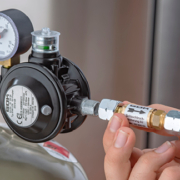
When do I need a diaphragm-controlled anti-siphon device?
The diaphragm-controlled anti-siphon device prevents the fuel oil tank from emptying completely in the event of leaks in fuel oil consumer installations.
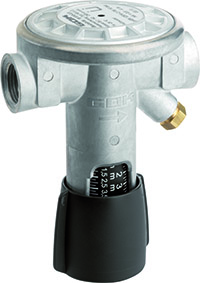 If the maximum filling level in the tank is above the lowest point of the suction line on a fuel oil consumer installation, a safety device against siphoning, also called anti-siphon device (image) or anti-siphon valve must be installed. The diaphragm-controlled anti-siphon device prevents the entire quantity of fuel oil from escaping from the tank unnoticeably without auxiliary energy in the event of leaks in the line of fuel oil consumer installations. Without a safety device against siphoning, environmental hazards and considerable material damage would be the consequence.
Function of a diaphragm-controlled anti-siphon device
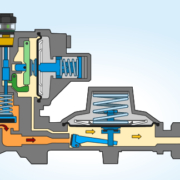
The switched on fuel oil feed pump generates a vacuum in the suction line. The vacuum causes a position change of the diaphragm, which in turn opens a sealing element. The fuel oil can now flow from the tank to the burner. If the pump no longer generates a vacuum or if the piping is leaking, the anti-siphon device closes and prevents the tank from draining.
You are currently viewing a placeholder content from Youtube. To access the actual content, click the button below. Please note that doing so will share data with third-party providers.
Alternative
An alternative to the diaphragm-controlled version is the solenoid valve anti-siphon device. By means of a solenoid valve, the safety device blocks the oil line when the burner is at a standstill and is normally closed. Once the burner pump has started up again, the anti-siphon device opens due to the control voltage applied.
Further information can be found in the assembly and operating manual.