Refillable LPG cylinder, refillable cylinder or refillable gas cylinder — different names for one and the same product: a hybrid between a gas cylinder and a gas tank for a motorhome or caravan. Thanks to their advantages, refillable gas cylinders made from aluminium and other materials have become widespread in recent years, along with the common belief that they can be refilled at LPG filling stations. Is that really the case?
Views:2
The basic idea is a good one — especially for campers who often travel abroad: I have a hybrid between a gas cylinder and a gas tank in my leisure vehicle, don’t have to deal with the different gas cylinder connections and can refill this container myself.
Gas cylinder & gas tank
Until now, you had to choose:
I use conventional gas cylinders and exchange an empty one for a full one.
I have a gas tank installed in my vehicle, which I can refill with LPG at filling stations.
The refillable gas cylinder is intended to remove the need to choose between the two. The promise is that I get the convenience of a gas cylinder, but can also refill it myself at LPG filling stations. Does it live up to that promise?
The so-called refillable gas cylinder offers many benefits in terms of handling and promises that users can refill it themselves at filling stations. Is that really the case?
What the technical rules say about refillable gas cylinders
Irrespective of how they are installed, cylinders and refillable cylinders (whether marked with the Pi or CE mark) may not be refilled at filling stations in Germany. This applies to private individuals, filling station attendants and “trained personnel” alike.
But what exactly is the reason? The installation and inspection of LPG systems in leisure vehicles are governed by DIN EN 1949 and DVGW Worksheet G 607. Both sets of rules define requirements for cylinders and tanks, but do not cover “refillable gas cylinders”. This means there is no valid set of rules for refillable gas cylinders and, by extension, the ban on refilling them in Germany remains in force.
Can you drive your leisure vehicle to an LPG filling station and refill your LPG supply using a refillable gas cylinder? The DVFG says this is still prohibited! Image source: pixabay.com
Update 11-2026 – Filling refillable LPG cylinders at service stations:
On 26 October 2026, the Deutscher Verband Flüssiggas (DVFG) announced that LPG tank cylinders in motor caravans and caravans may now be filled at public autogas filling stations in Germany. This is based on the amended Technical Rule for Operational Safety TRBS 3151, published in the Joint Ministerial Gazette on 20 October 2026. The previous view that filling LPG tank cylinders at filling stations was prohibited therefore no longer applies.
The prerequisite is that the LPG tank cylinder is permanently installed in the vehicle in accordance with the current DVGW code of practice G 607. Filling may only be carried out via a filling hole connector fitted on the outside of the vehicle, and the filler line must not be routed through the living space. A safety coupling must be fitted between the tank cylinder and the external filling hole connector. The automatic overfill prevention limits filling to 80 per cent, and the safety valve vents gas if there is an unexpected rise in pressure. Anyone who owns an LPG tank cylinder should have the system checked before its first filling to confirm that it meets the G 607 requirements. If it does not comply, the installation must be modified and then inspected by a recognised qualified expert.
It is important to note this distinction: the new rule applies only to permanently installed LPG tank cylinders. Conventional 5 kg or 11 kg gas cylinders still may not be filled at autogas dispensers. For these, we continue to recommend a cylinder exchange or filling by authorised specialist personnel at a suitable filling point.
Update 07-2026 — Refillable gas cylinders included in G 607:
The revised DVGW Worksheet G 607 now mentions refillable gas cylinders in a technical rule for the first time. Although G 607 refers to “pressure vessels for self-filling”, it is in fact referring to so-called refillable LPG cylinders and refillable gas cylinders. G 607 sets out requirements for their installation, safety precautions and inspection intervals.
Unfortunately, this still does not mean that refillable gas cylinders may now be refilled at LPG pumps at filling stations in Germany. According to the DVFG, cylinders and refillable cylinders may not currently be refilled at filling stations in Germany. However, the DVFG says that a corresponding regulation is being prepared. So it looks as though the ongoing discussions about the installation, use and refilling of refillable gas cylinders may soon come to an end. We’ll report back as soon as there is any news.
Want to learn more?
Here are more articles about refillable gas cylinders and G 607
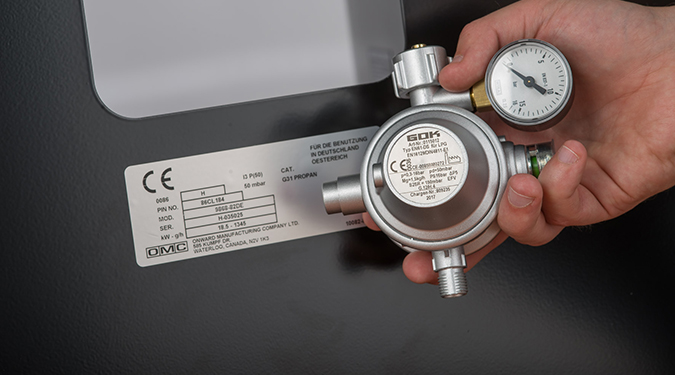
Ever since the first refillable gas cylinders went on sale, we have regularly been asked: are your pressure regulators and fittings compatible with refillable gas cylinders? If we consider the question in isolation, we can say: Yes, GOK pressure regulators fit the connections on refillable gas cylinders and, in most cases, their associated equipment too.
In most cases, GOK fittings are compatible with refillable gas cylinders. However, there are a few things to bear in mind.
If you have recently bought a refillable gas cylinder, or are thinking about buying one, you can continue to use GOK products. Just make sure you use the correct connections. Following the latest updates in 2026, it is now finally clear that refillable gas cylinders may be used and refilled at the relevant filling stations. Unfortunately, this does not apply across the whole of Europe.
Below, we have linked to articles about relevant travel destinations. They cover the national rules on refillable gas cylinders in those countries, where known or where such rules exist.
The articles are written by specialist authors in the fields of LPG, fuel oil, liquid media, tank management and safety engineering, who contribute their expertise from product management, development, technical customer support, training and standardisation activities.
The members of the editorial team have many years of practical experience in the planning, application and further development of technical solutions for the safe supply of LPG and liquid fuels. Several authors are actively involved in specialist committees and working groups of the DVGW, DVFG and figawa, as well as in national and European standardisation committees. The team includes, among others, experts certified in accordance with G 607 and G 608, competent persons in accordance with the TRF, and specialists who contribute to the development and evaluation of technical regulations and industry standards.
In addition to providing information about GOK products and solutions, the editorial team focuses on sharing knowledge relating to safety, regulations, maintenance, operation and future technologies in the field of LPG and liquid media.
Share this post
Related articles
Are GOK pressure regulators and fittings compatible with refillable gas cylinders?
Camping & Leisure
Gas Supply in Italy: What You Need to Know When Travelling with a Motorhome or Caravan
Camping & Leisure
Gas Supply in France: What Do I Need to Know When Travelling by Motorhome or Caravan?
Camping & Leisure
Gas supply in Spain: What do I need to consider with a motorhome or caravan?
Safety
Gas supply in Scandinavia – What do I need to consider when travelling with a motorhome or caravan?
Camping & Leisure
Gas supply in Poland: What motor home and caravan campers need to know
Camping & Leisure
Frequently asked questions about refilling refillable gas cylinders
Yes. Following the 2026 update to DVGW Worksheet G 607 and the revision to TRBS 3151, refillable gas cylinders may be used in leisure vehicles and refilled at filling stations.
Because neither refillable cylinders nor refillable gas cylinders are covered by the relevant rules. There is no legal basis for refilling them at filling stations, so it is prohibited.
The relevant rules are DIN EN 1949, DVGW Worksheet G 607 and TRBS 3151. Together, they govern installation, operation and refilling in Germany.
Yes — permanently installed LPG tanks in motorhomes or caravans with a suitable external filling connection may still be used and refilled at LPG pumps. This does not apply to removable refillable gas cylinders.
Yes — in most cases, the connection threads (usually KLF/G.12) are compatible with GOK regulators and fittings. However, it should be noted that refilling is prohibited.
Use conventional, tried-and-tested options:
– Exchange a conventional gas cylinder or have it refilled
– Use a permanently installed gas tank with an external filling connection
You might also find this interesting
How can I use several LPG cylinders in the caravan, motor caravan or on the boat at the same time?
Camping & Leisure
How does a PRV pressure relief valve work?
Camping & Leisure, Home & Commercial, Safety
Which pressure regulator do I need for which output?
Camping & Leisure, Grill & BBQ, Home & Commercial
Are there any differences in the gas test of mobile homes or caravans and motor caravans?
Camping & Leisure
How do I know when I need to replace the components of my LPG system?
Camping & Leisure, Grill & BBQ, Home & Commercial
Where can I find operating manuals for GOK products?
Camping & Leisure, Grill & BBQ, Home & Commercial, Tank & Liquid Media
From what length of hose assembly do I need an excess flow device?
Camping & Leisure, Grill & BBQ, Home & Commercial
Which pressure regulator connections exist for LPG cylinders in Europe?
Camping & Leisure, Grill & BBQ, Home & Commercial
Does the pressure regulator gauge show the filling level of the LPG cylinder?
Camping & Leisure, Grill & BBQ, Home & Commercial
How do I carry out a simplified leak check on an LPG cylinder system?
Camping & Leisure, Grill & BBQ, Home & Commercial
How do I identify the year of manufacture of a pressure regulator from GOK?
Camping & Leisure, Grill & BBQ, Home & Commercial
How do I find out whether the nominal pressure on the pressure regulator and gas equipment match?
Camping & Leisure, Grill & BBQ, Home & Commercial
This blog will never ask members of the public or unqualified persons to make changes to or fiddle around with technical systems themselves.
In accordance with the Industrial Safety Regulation (BetrSichV), a qualified person must take care of a system which requires monitoring.
A qualified person is someone who has the specific specialist knowledge required. This knowledge is gained by way of a professional apprenticeship, corresponding professional experience or current occupational activity.
Please note that the texts are based on information, regulations and standards for Germany. Please always check the rules and regulations in the relevant country of destination and consult specialists if necessary.