If you want to make spareribs, pulled pork or beef brisket in the classic “low & slow” way at 110 degrees Celsius, you sometimes have problems with your gas grill. Either the grill has too much power and cannot reach such low temperatures or it fluctuates too much.
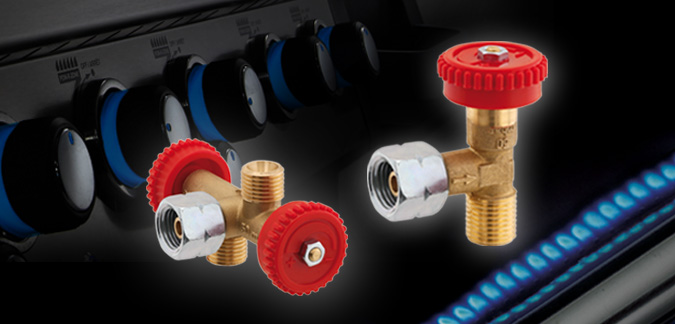
With the control valve from GOK, it will certainly work – no matter which gas grill.
Views:103
Can you make spare ribs or pulled pork “low & slow” on the gas barbecue, i.e. cooking at a low temperature? Of course you can! But the problem here is often keeping the temperature on the gas barbecue constantly in the recommended range between 110 and 120 degrees Celsius – regardless of whether you have a gas barbecue from Broil King, Napoleon, Outdoorchef, Weber, or any other brand. It’s sure to work out with GOK products.
While some can’t really keep the temperature constant, others struggle with getting the temperature so far down that you can call it “low temperatures”. In other words: Some barbecues have so much power, even on their lowest setting, that they cannot sustain a temperature of 110 degrees for a long period of time with the cover closed.
Tinkering
Out come the tinkerers: Building spacers out of various materials to keep the cover a little bit open. The disadvantage here, especially for “low and slow” cooking: If the night gets colder or the wind picks up, the consistency of the temperature progression goes out the window. The temperature fluctuates too much, it becomes impossible to calculate the cooking time and the cook jeopardises the perfect result.
There’s no more need to mess around when you have a simple and reasonably-priced aid to do this for you. The control valve allows you to adjust the temperature rather precisely and constantly in advance. How does it work?
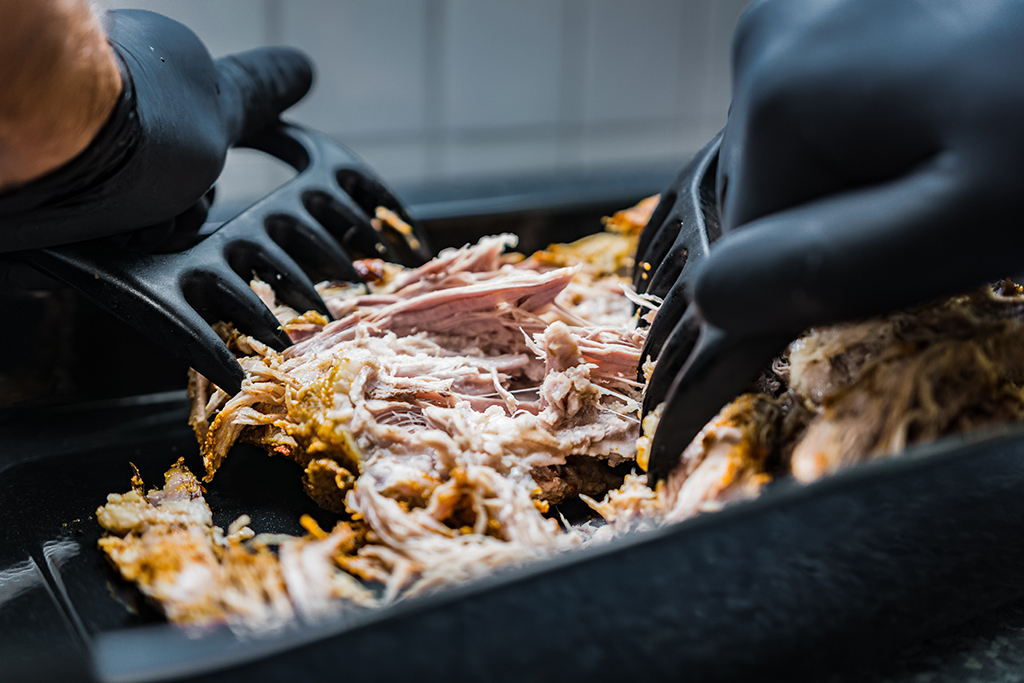
You get the best results with pulled pork when the gas barbecue is kept at a constant temperature of between 110 and 120 degrees Celsius. The adjustment is sure to work with a control valve from GOK.Image by Daniel Memmler on Pixabay
The solution
The cook installs the control valve between the pressure reducer – ideally the barbecue control valve from GOK – and hose assembly or upstream excess flow device. This control valve allows you to make very fine adjustments to the flow rate amount. That means that, there is the same pressure at the gas barbecue as before, but the valve allows less or more gas through – depending on the direction the dial is turned in. This allows you to control the flame intensity of the burners, and also regulate the temperature in the gas barbecue very precisely.
This is what it would actually look like to do this: The cook fires up their gas barbecue and brings the target temperature towards 110 degrees Celsius. From experience, most people probably know more or less how many burners should be on and at what level to maintain the temperature.
Tips for adjustments
Then you wait for a few minutes to see how the barbecue reacts – whether the temperature moves too far away from the desired 110 degrees Celsius. If, for example, you have already switched off two out of the three burners and have the third burner on the lowest level, but the temperature is still increasing above 120 degrees Celsius, this is when the GOK control valve can help.
Professionals on the control valve
Control the flow rate amount with the valve so that you are as close as possible to the 110 degrees Celsius mark. Don’t worry, this definitely works. The famous YouTubers, the Sizzlebrothers, swear by the control valve for preparing the perfect barbecued pulled pork:
Conclusion
Only a constant temperature guarantees the best results with the “low and slow” barbecue technique, for spare ribs, pulled pork or beef brisket, for example. And fine adjustments at the start of the barbecue guarantee this constant temperature. This is very easy with the GOK control valve, allowing the cook to control the gas volume with a great deal of precision.
This makes barbecues with a lot of power (too much power?) easier to control, or to adjust the majority of gas barbecues in terms of temperature – and consistency above all.
The valve is also available as a branch stop valve. This means that you could connect a second hose assembly to the valve and operate another barbecue at the same time. Of course, when doing so, you should also be aware of how much gas you can withdraw from a single gas cylinder:
The articles are written by specialist authors in the fields of LPG, fuel oil, liquid media, tank management and safety engineering, who contribute their expertise from product management, development, technical customer support, training and standardisation activities.
The members of the editorial team have many years of practical experience in the planning, application and further development of technical solutions for the safe supply of LPG and liquid fuels. Several authors are actively involved in specialist committees and working groups of the DVGW, DVFG and figawa, as well as in national and European standardisation committees. The team includes, among others, experts certified in accordance with G 607 and G 608, competent persons in accordance with the TRF, and specialists who contribute to the development and evaluation of technical regulations and industry standards.
In addition to providing information about GOK products and solutions, the editorial team focuses on sharing knowledge relating to safety, regulations, maintenance, operation and future technologies in the field of LPG and liquid media.
Share this post
Related articles
Which GOK components do I need as a private individual for my gas barbecue?
Safety
You might also find this interesting
Which pressure regulator do I need for which output?
Camping & Leisure, Grill & BBQ, Home & Commercial
How do I know when I need to replace the components of my LPG system?
Camping & Leisure, Grill & BBQ, Home & Commercial
Where can I find operating manuals for GOK products?
Camping & Leisure, Grill & BBQ, Home & Commercial, Tank & Liquid Media
From what length of hose assembly do I need an excess flow device?
Camping & Leisure, Grill & BBQ, Home & Commercial
Which pressure regulator connections exist for LPG cylinders in Europe?
Camping & Leisure, Grill & BBQ, Home & Commercial
Does the pressure regulator gauge show the filling level of the LPG cylinder?
Camping & Leisure, Grill & BBQ, Home & Commercial
How do I carry out a simplified leak check on an LPG cylinder system?
Camping & Leisure, Grill & BBQ, Home & Commercial
How do commercial operation and private operation of a gas barbecue differ?
Grill & BBQ
How do I identify the year of manufacture of a pressure regulator from GOK?
Camping & Leisure, Grill & BBQ, Home & Commercial
How do I find out whether the nominal pressure on the pressure regulator and gas equipment match?
Camping & Leisure, Grill & BBQ, Home & Commercial
What spanner size do coupling nuts on pressure regulators have for connecting to LPG cylinders in Germany?
Camping & Leisure, Grill & BBQ, Home & Commercial
How can I operate gas cartridge devices via an LPG cylinder?
Camping & Leisure, Grill & BBQ
This blog will never ask members of the public or unqualified persons to make changes to or fiddle around with technical systems themselves.
In accordance with the Industrial Safety Regulation (BetrSichV), a qualified person must take care of a system which requires monitoring.
A qualified person is someone who has the specific specialist knowledge required. This knowledge is gained by way of a professional apprenticeship, corresponding professional experience or current occupational activity.
Please note that the texts are based on information, regulations and standards for Germany. Please always check the rules and regulations in the relevant country of destination and consult specialists if necessary.