Of particular interest for long-term camping and winter camping: the supply of caravans and motor caravans with outside gas cylinders.
Inhaltsverzeichnis
Of particular interest for long-term camping and winter camping: the supply of caravans and motor caravans with outside gas cylinders.

It’s a familiar problem when camping on a long-term basis or during the winter: with frequent use, the 5 or 11 kilogramme on-board gas cylinder runs out quickly, and the vehicle in which you enjoy your leisure time gets cold.
The temperatures outside are low, which also makes it necessary for the gas heating system to have long running times. This is naturally reflected in the gas consumption. A gas cylinder with a filling weight of 5 or 11 kilogrammes runs out quickly, especially when other consumer equipment such as a gas hob, fridge or gas grill are installed in or on the caravan or motor caravan.
If you use a lot of gas, it is necessary to change the gas cylinder very frequently. The cost of replacing an empty gas cylinder varies, and ultimately depends on your distance from the nearest gas retailer.
If you want to reduce the number of journeys you make to your gas retailer, using a 33 kilogramme cylinder which is situated outside your caravan could be the right solution for you. GOK has developed a set for supplying the LPG system of a leisure vehicle from the outside properly and safely – with a long-lasting 33 kilogramme cylinder, for example.
With an external gas socket, those who previously “only” used a 5 or 11 kilogramme gas cylinder are able to respectively increase their gas supply by more than six or three times. The external LPG feed can be fitted quickly and easily.
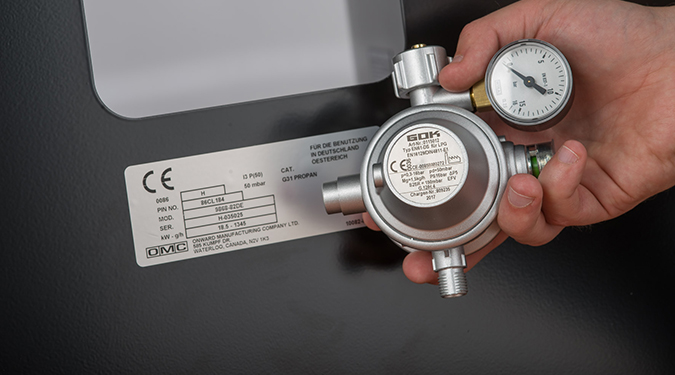
Firstly, what is referred to as an outlet box is fitted to the outer wall of the vehicle. This contains a plug-in fitting for the connection of a gas hose, which means it is a kind of gas socket. This external gas socket acts as an interface between the external and internal gas supply of the motor caravan, caravan or box-type vehicle. Inside the vehicle, the workman must then install a set of piping and a manual changeover valve on the pressure regulator which is mounted on the wall.
The feed line of the outlet box is now situated on one of the two inlet connectors of the changeover valve. The connection to the single-cylinder system (high pressure hose assembly) is situated on the other one. The pressure regulator which is mounted in the (gas) cylinder case is connected to the outlet nozzle of the changeover valve.

With respect to the components used for external LPG feed via an external gas socket, the single- and two-cylinder systems do not differ. Only the installation position of the manual changeover valve changes. This is positioned on either the operating or reserve side of the two-cylinder system – directly on the control device or after the gas filter.


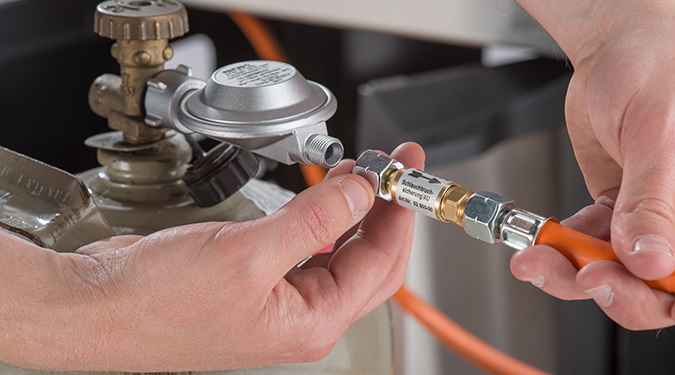
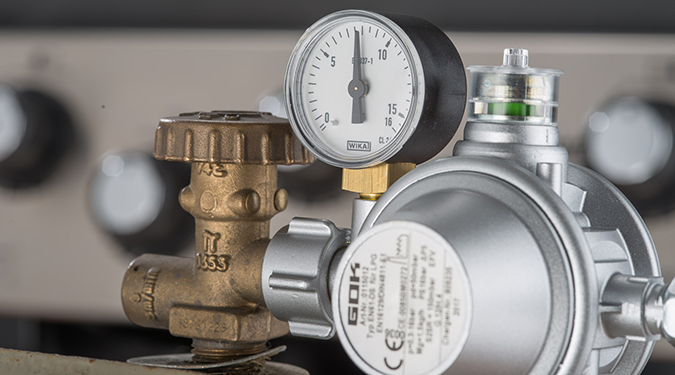
Once the manual changeover valve and the external gas socket have been installed, the operator sets the 33 kilogramme cylinder up outside, screws the medium pressure regulator on, and finally establishes the connection to the outlet box with a hose assembly. The LPG feed from a cylinder which is situated outside is only permitted with the use of this system concept.
To supply gas without any problems, a variety of safety devices are installed in the system components. Further information is available on our website. If installed correctly and professionally, the set for the feed-in complies with the standard and is approved. All the operator needs to do now is to think about their camping destination. And they no longer need to worry about how they can ensure their long-term gas supply without having to change the cylinder all the time.
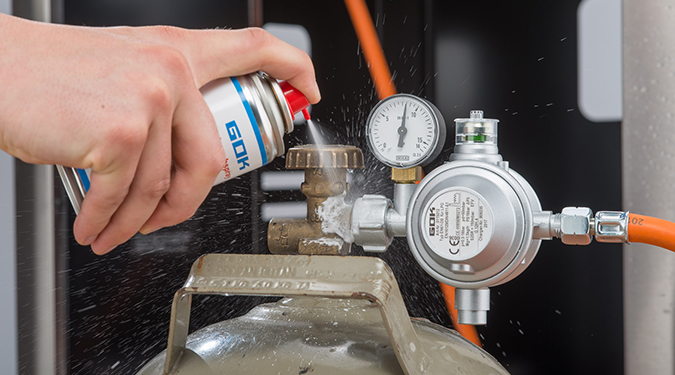
Before the new external gas socket is used for the first time, it is necessary to proceed to the gas test. The conversion consists of a modification of the previous installation of the LPG system. According to G 607 Code of Practice, an expert is required to check the system for safety and document the result.
This blog will never ask members of the public or unqualified persons to make changes to or fiddle around with technical systems themselves.
In accordance with the Industrial Safety Regulation (BetrSichV), a qualified person must take care of a system which requires monitoring.
A qualified person is someone who has the specific specialist knowledge required. This knowledge is gained by way of a professional apprenticeship, corresponding professional experience or current occupational activity.
Please note that the texts are based on information, regulations and standards for Germany. Please always check the rules and regulations in the relevant country of destination and consult specialists if necessary.