Gas hoses – also called hose assemblies – are a central component in any LPG system, whether camping, at the barbecue, in the garden, or in commercial use. Yet many users are unaware that these hoses are not indefinitely durable.
Inhaltsverzeichnis
Gas hoses – also called hose assemblies – are a central component in any LPG system, whether camping, at the barbecue, in the garden, or in commercial use. Yet many users are unaware that these hoses are not indefinitely durable.
Gas hoses – also called hose assemblies – are a central component in any LPG system, whether camping, at the barbecue, in the garden, or in commercial use. Yet many users are unaware that these hoses are not indefinitely durable.
Material ageing, UV radiation and mechanical stress can, over time, lead to cracks or porosity which, in the worst case, can cause dangerous leaks. National regulations, such as DVGW rules, or European standards, specify clear replacement intervals to ensure safety. In this article, you will find out how long a gas hose may be used, the differences between private and commercial use, how to recognise wear – and how to operate your LPG system safely through timely replacement.
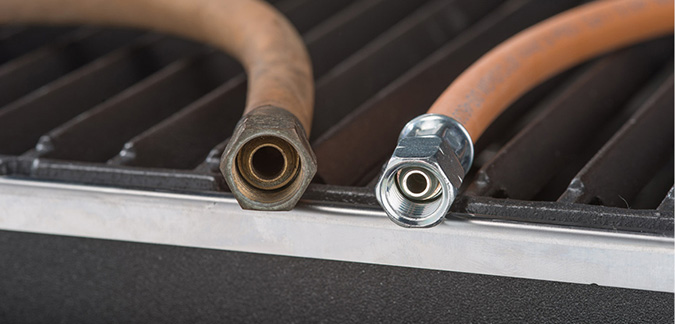
Gas hoses generally consist of several layers – a rubber or thermoplastic inner layer, and a rubber or plastic outer layer. This provides flexibility but is still susceptible to typical ageing processes. Over time, the material properties change because gas hoses can be exposed to high stresses, such as:
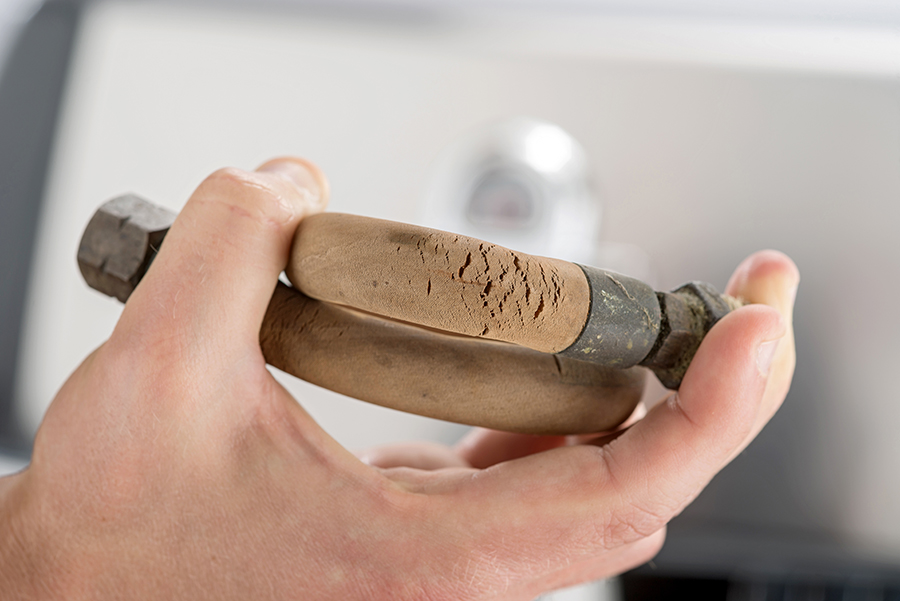
Even if a hose appears undamaged externally, internal material damage may already be present. This is why the service life of gas hoses is limited – regardless of how often they are used. And one thing is certain: the older the hose, the greater the degree of ageing.
The service life of gas hoses is not only a technical matter but also a legal one – the two are almost inevitably linked. In Germany – and many other countries – there are clear requirements, based primarily on the Technical Rules for LPG (TRF), the DVGW worksheets and accident prevention regulations, such as those issued by the German Social Accident Insurance (DGUV). For gas hoses, the following apply:
These regulations ensure that gas hoses are operated only within their safe service life. Failure to comply risks not only personal safety but also potential liability issues in the event of damage.
The recommended service life of a gas hose depends on several factors – particularly the type of use, environmental conditions, and applicable regulations. As a rule:
Immediate replacement is always necessary if leaks, cracks, pinch points, or porous areas are detected – regardless of the age of the hose assembly.
It is also essential to note: the replacement interval always refers to the manufacture date of the gas hose, not the installation date.
A gas hose should be visually inspected on a regular basis. Typical signs of wear or damage include:
Particular care should be taken if the hose has an unusual smell (gas smell) or if a hissing noise is audible. In such cases, operation must be stopped immediately, and the hose replaced.
Safe operation of an LPG system requires that the gas hose is regularly checked and replaced professionally when necessary.

If in doubt, or if operating commercially under DGUV rule 110-010, the hose replacement should be carried out by an approved specialist company.
Any modification of an LPG system and any component replacement requires a new inspection and updated documentation.
Gas hoses are safety-critical components with a limited service life. Regardless of external condition, replacement must be carried out regularly in accordance with applicable regulations – generally after 10 years in private use, often earlier in commercial settings. Weathering, UV radiation and mechanical stress shorten service life further. Regular inspection, timely detection of wear and adherence to replacement intervals not only ensure safety but also prevent costly consequential damage.
Recommendation: Check your gas hose before each use, at least annually, carry out a leak test, and replace it immediately if damaged – regardless of age.
This blog will never ask members of the public or unqualified persons to make changes to or fiddle around with technical systems themselves.
In accordance with the Industrial Safety Regulation (BetrSichV), a qualified person must take care of a system which requires monitoring.
A qualified person is someone who has the specific specialist knowledge required. This knowledge is gained by way of a professional apprenticeship, corresponding professional experience or current occupational activity.
Please note that the texts are based on information, regulations and standards for Germany. Please always check the rules and regulations in the relevant country of destination and consult specialists if necessary.