Choosing the right energy source for your motorhome, caravan, or camper van is crucial for comfort and efficiency on the road. Both LPG and electricity offer specific advantages depending on the use case. Therefore, there’s no one-size-fits-all recommendation; instead, the decision should be tailored to individual needs.
Post Views:92
Choosing the right energy source for your motorhome, caravan, or camper van is crucial for comfort and efficiency on the road. Both LPG and electricity offer specific advantages depending on the use case. Therefore, there’s no one-size-fits-all recommendation; instead, the decision should be tailored to individual needs.
Heating in Motorhomes: LPG or Electricity?
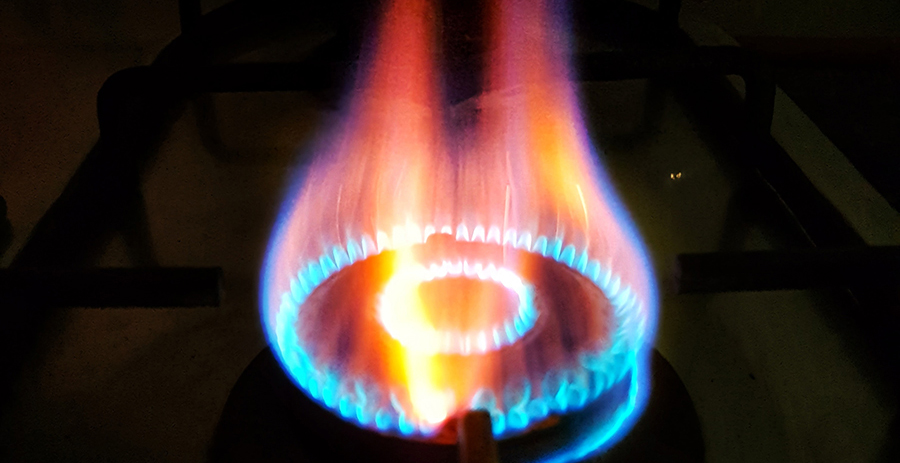
Many campers rely on LPG for heating. Gas heaters are efficient and allow for off-grid camping without an external power source. Additionally, LPG burns almost pollution-free, making it an eco-friendly option. A typical caravan heater has an output of 6.2 kW and consumes around 480 grams of LPG per hour.
Electric heaters, on the other hand, are often cheaper to buy but incur higher operating costs and require a continuous power supply. The maximum output of a campsite power connection is often only 2.2 to 3.5 kW (230 V, 10 A or 16 A). Therefore, those wishing to heat their motorhome electrically need powerful batteries or a continuous external power supply of sufficient strength.
Cooking and Cooling: Flexibility of Energy Sources
For cooking, LPG has the advantage of being usable without a power source. A 2-burner gas stove requires about 194 grams of LPG per hour, delivering up to 2.5 kW of power. This is significantly more powerful than many portable electric hobs, which are often limited to 1.8 to 2.2 kW.
LPG also shines in cooling, especially with absorption refrigerators that can run on both gas and electricity. The advantage of LPG here is its independence from an external power source, enabling longer off-grid trips. Additionally, absorption refrigerators often operate silently and efficiently on gas, making them ideal for camping vehicles. Electric cooling systems, particularly compressor refrigerators, rely on a stable power supply, which can limit their use in off-grid situations.
A significant advantage of LPG is its high energy density. An 11-kg gas cylinder contains about 142 kWh of energy, while a 200-Ah lithium battery stores only about 2.5 kWh. To match the energy content of a single 11-kg gas cylinder, a 200-Ah battery would need to be fully charged 57 times.
Practical Example: A 1.8 kW hotplate could theoretically run for 79 hours on an 11-kg gas cylinder, while a 200-Ah battery could power the same hotplate for only 1.4 hours. These figures impressively demonstrate why LPG is a preferred energy source for off-grid travel.
Cost Comparison: LPG vs. Electric System
Economically, LPG also has advantages. A complete LPG system in a motorhome costs around €1,000, while an off-grid electric system with a 200-Ah lithium battery, inverter, and solar panel can quickly cost €10,000 or more. Those wanting to travel off-grid must invest significantly more in a purely electric solution.
However, LPG also incurs ongoing costs, as new gas cylinders need to be purchased and refilled regularly. In contrast, electricity can be generated “for free” using solar panels. However, solar energy is not always reliably available—especially in bad weather or winter. In these cases, electricity must be sourced externally, incurring additional costs.
Solar panels for camping vehicles generate electricity very cost-effectively. However, those who want to rely solely on electricity for camping should consider a few things: LPG might be the better alternative as an energy source. AI-generated with the help of gemini.google.com – Public Domain Mark
Conclusion: The Right Choice Depends on Individual Needs
The decision between LPG and electricity as an energy source in a motorhome or caravan should always be based on personal needs and travel habits. While LPG scores with independence, high energy density, and relatively low costs, electric systems offer comfort—provided a reliable power supply is ensured.
For off-grid campers, winter campers, or frequent cooks, LPG is the better choice. Those who mainly stay on campsites with hook-ups and consume little energy can get by with an electric solution. Ultimately, there is no universally best choice—the optimal combination depends on individual requirements.
The articles are written by specialist authors in the fields of LPG, fuel oil, liquid media, tank management and safety engineering, who contribute their expertise from product management, development, technical customer support, training and standardisation activities.
The members of the editorial team have many years of practical experience in the planning, application and further development of technical solutions for the safe supply of LPG and liquid fuels. Several authors are actively involved in specialist committees and working groups of the DVGW, DVFG and figawa, as well as in national and European standardisation committees. The team includes, among others, experts certified in accordance with G 607 and G 608, competent persons in accordance with the TRF, and specialists who contribute to the development and evaluation of technical regulations and industry standards.
In addition to providing information about GOK products and solutions, the editorial team focuses on sharing knowledge relating to safety, regulations, maintenance, operation and future technologies in the field of LPG and liquid media.
Share this post
Related articles
No results found.
FAQ – the most frequently asked questions about LPG or electricity in the camper
Gas heaters are efficient, require no external power supply and allow off-grid heating – ideal for travelling away from campsites.
Electric heaters depend on a continuous and sufficiently strong electricity supply, which limits or prevents off-grid heating.
LPG delivers more power, can be used independently of the mains supply and is especially suitable for ambitious cooking on the road.
Absorption refrigerators running on gas operate silently, efficiently and independently of the mains – ideal for off-grid camping.
An 11-kg gas cylinder provides about 142 kWh of energy – a 200 Ah battery only around 2.5 kWh. To match the gas cylinder, the battery would have to be charged 57 times.
Gas incurs ongoing costs but requires a lower initial investment. Electric systems are expensive to install, but solar panels can generate electricity at almost no cost.
The decision depends on travel habits, cooking and heating preferences, and whether the camper is used off-grid or mainly on campsites.
You might also find this interesting
How can I use several LPG cylinders in the caravan, motor caravan or on the boat at the same time?
Camping & Leisure
How does a PRV pressure relief valve work?
Camping & Leisure, Home & Commercial, Safety
Which pressure regulator do I need for which output?
Camping & Leisure, Grill & BBQ, Home & Commercial
Are there any differences in the gas test of mobile homes or caravans and motor caravans?
Camping & Leisure
How do I know when I need to replace the components of my LPG system?
Camping & Leisure, Grill & BBQ, Home & Commercial
Where can I find operating manuals for GOK products?
Camping & Leisure, Grill & BBQ, Home & Commercial, Tank & Liquid Media
From what length of hose assembly do I need an excess flow device?
Camping & Leisure, Grill & BBQ, Home & Commercial
Which pressure regulator connections exist for LPG cylinders in Europe?
Camping & Leisure, Grill & BBQ, Home & Commercial
Does the pressure regulator gauge show the filling level of the LPG cylinder?
Camping & Leisure, Grill & BBQ, Home & Commercial
How do I carry out a simplified leak check on an LPG cylinder system?
Camping & Leisure, Grill & BBQ, Home & Commercial
How do I identify the year of manufacture of a pressure regulator from GOK?
Camping & Leisure, Grill & BBQ, Home & Commercial
How do I find out whether the nominal pressure on the pressure regulator and gas equipment match?
Camping & Leisure, Grill & BBQ, Home & Commercial
This blog will never ask members of the public or unqualified persons to make changes to or fiddle around with technical systems themselves.
In accordance with the Industrial Safety Regulation (BetrSichV), a qualified person must take care of a system which requires monitoring.
A qualified person is someone who has the specific specialist knowledge required. This knowledge is gained by way of a professional apprenticeship, corresponding professional experience or current occupational activity.
Please note that the texts are based on information, regulations and standards for Germany. Please always check the rules and regulations in the relevant country of destination and consult specialists if necessary.