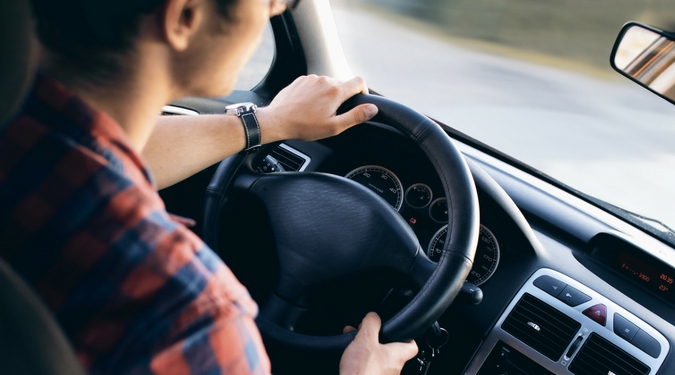
The medium LPG is experiencing growing popularity just now thanks to its many advantages. The greater the consumption, the more often users need to fill or replace the gas cylinder. As very few people do this on foot, the overwhelming majority of transportations are done with people’s own private cars. And here, private individuals need to follow a few rules to prevent subjecting themselves to unnecessary risks. We have a list of what you must look out for.
Post Views:1,179
The medium LPG is experiencing growing popularity just now thanks to its many advantages. The greater the consumption, the more often users need to fill or replace the gas cylinder. As very few people do this on foot, the overwhelming majority of transportations are done with people’s own private cars. And here, private individuals need to follow a few rules to prevent subjecting themselves to unnecessary risks. We have a list of what you must look out for.
But first, some important information: This article is only about transporting LPG cylinders for private use. Commercial transport is covered by other regulations which are not the subject of this article.
Before loading
Generally speaking, transporting LPG cylinders in private vehicles is permitted, but only for a short time. It isn’t stipulated anywhere, but your journey with a gas cylinder on board should not last longer than one hour.
Check your gas cylinder very carefully, especially regarding leak-tightness and possible damage. Handle your empty cylinders just like your full ones. This is because even supposedly empty gas tanks always still contain a certain residual amount of gas. Do not transport cylinders which have leaks or which are damaged.
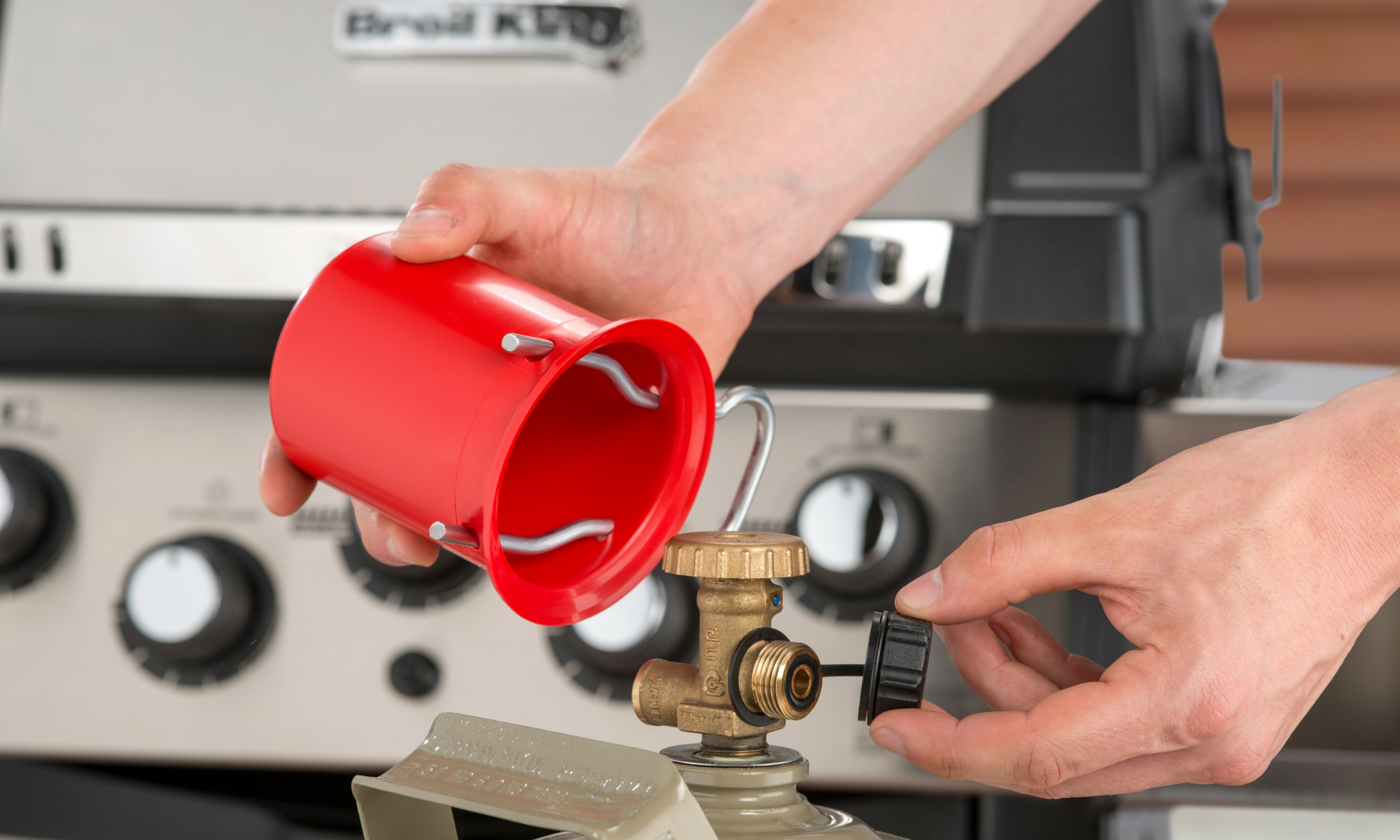
During a close visual inspection, you should also ensure that the gas cylinder valve has its protective cap. This protective cap must always be present during transport, regardless of whether you are bringing back an empty cylinder or picking up a full one.
Before transport, always place the protective cap (red) on the gas cylinder valve. This prevents damage to the valve during an accident, or if the gas cylinder becomes loose during transport.
Only load the gas cylinder shortly before beginning the journey, and before doing this, think about possible accessories to secure the load. These could be lashing straps, anti-slip mats or special holders. You will find more on this under “When loading”.
As a private person, you will probably not find yourself in this quandary, but for the sake of completeness, we’ll let you know anyway: In total, you are permitted to carry a maximum of 333 kilograms net mass. And it might sound funny, but this is serious: Never throw gas cylinders.
You must always stow and secure LPG cylinders so that they cannot roll around or slip if you have to perform an emergency stop or take sudden evasive manoeuvres. This is why you should use the accessories mentioned under “Before loading”. If you don’t have anything like this, you can look at this tip from Gasprofi24:
Unlike operating your gas cylinder, when transporting them, you are permitted to have them lying down (transverse to the direction of travel) as well as standing upright (stability!) . If you disregard the need to secure the load, you may end up with a hefty fine and points on your licence.
When driving
While driving, make sure to either have the air-conditioning on high or the windows opened. In any case, you must ensure sufficient ventilation. This will ensure that nothing will happen if the gas cylinder suddenly develops a leak. If you drive a convertible, you can combine the necessary with the delightful.
Be sure to protect the gas cylinder from heating up to above 50 degrees Celsius. So, if you need to take a rest stop with your cylinder, it’s best not to park in direct sunlight.
After the journey / General
Unload the transported LPG cylinders as quickly as you can and do not leave them in the car for hours – especially not in direct sunlight. In unfortunate cases, LPG can accumulate inside the car and then just one little spark is enough to cause an explosion.
And not just because of this: Smoking is strictly prohibited when loading and unloading, as well as during transport. This also applies to e-cigarettes. Also forbidden during transport: Using fire and naked lights.
If you’ve taken heed of all this, you are not putting yourself, your passengers and other road users in any danger when transporting LPG cylinders. You can find all the information on an instruction sheet by the German LPG Association (DVFG).
The articles are written by specialist authors in the fields of LPG, fuel oil, liquid media, tank management and safety engineering, who contribute their expertise from product management, development, technical customer support, training and standardisation activities.
The members of the editorial team have many years of practical experience in the planning, application and further development of technical solutions for the safe supply of LPG and liquid fuels. Several authors are actively involved in specialist committees and working groups of the DVGW, DVFG and figawa, as well as in national and European standardisation committees. The team includes, among others, experts certified in accordance with G 607 and G 608, competent persons in accordance with the TRF, and specialists who contribute to the development and evaluation of technical regulations and industry standards.
In addition to providing information about GOK products and solutions, the editorial team focuses on sharing knowledge relating to safety, regulations, maintenance, operation and future technologies in the field of LPG and liquid media.
Share this post
Related articles
Why is a butane or propane gas cylinder never filled to 100 percent?
Safety
You might also find this interesting
How many kilowatt hours correspond to a kilogram of LPG (propane)?
Safety
How can I use several LPG cylinders in the caravan, motor caravan or on the boat at the same time?
Camping & Leisure
How does a PRV pressure relief valve work?
Camping & Leisure, Home & Commercial, Safety
Which pressure regulator do I need for which output?
Camping & Leisure, Grill & BBQ, Home & Commercial
Are there any differences in the gas test of mobile homes or caravans and motor caravans?
Camping & Leisure
How do I know when I need to replace the components of my LPG system?
Camping & Leisure, Grill & BBQ, Home & Commercial
Where can I find operating manuals for GOK products?
Camping & Leisure, Grill & BBQ, Home & Commercial, Tank & Liquid Media
From what length of hose assembly do I need an excess flow device?
Camping & Leisure, Grill & BBQ, Home & Commercial
Which pressure regulator connections exist for LPG cylinders in Europe?
Camping & Leisure, Grill & BBQ, Home & Commercial
How can I release an OPSO (SAV)?
Home & Commercial
What is an OPSO (SAV) and how does it work?
Home & Commercial
Does the pressure regulator gauge show the filling level of the LPG cylinder?
Camping & Leisure, Grill & BBQ, Home & Commercial
This blog will never ask members of the public or unqualified persons to make changes to or fiddle around with technical systems themselves.
In accordance with the Industrial Safety Regulation (BetrSichV), a qualified person must take care of a system which requires monitoring.
A qualified person is someone who has the specific specialist knowledge required. This knowledge is gained by way of a professional apprenticeship, corresponding professional experience or current occupational activity.
Please note that the texts are based on information, regulations and standards for Germany. Please always check the rules and regulations in the relevant country of destination and consult specialists if necessary.