Storage of gas cartridges in buildings or basements – what is permitted and what is prohibited
Is it allowed to store gas cartridges in the home? What about the basement? Many users are unsure when it comes to the correct storage of gas cartridges. This article explains what is permitted under regulations, which risks exist and how you can safely store gas cartridges indoors.
If you often spend your leisure time outdoors, you may have already used the practical gas cartridge. As we mentioned at the beginning, campers, barbecue cooks etc. can use the cartridges for a wide variety of purposes.
Gas cartridges are part of everyday life for many people – whether for camping, barbecuing or as an energy source for heating and cooking appliances. However, when it comes to storing these small gas containers, there is often uncertainty: Are they allowed to be kept in the home? Is the basement a suitable place? And which regulations actually apply?
In this article, you will receive well-founded answers to these questions. We explain where gas cartridges may be stored within a building, which legal regulations apply and why certain locations such as the basement are prohibited. In addition, we provide practical tips for safe indoor storage.
The aim is to provide you, as a professional user, technically knowledgeable retailer or safety-conscious end consumer, with reliable guidance – based on the Technical Rules for Liquefied Gas (TRF) and Worksheet G 612 issued by the DVGW (German Technical and Scientific Association for Gas and Water).
Where are gas cartridges typically used?
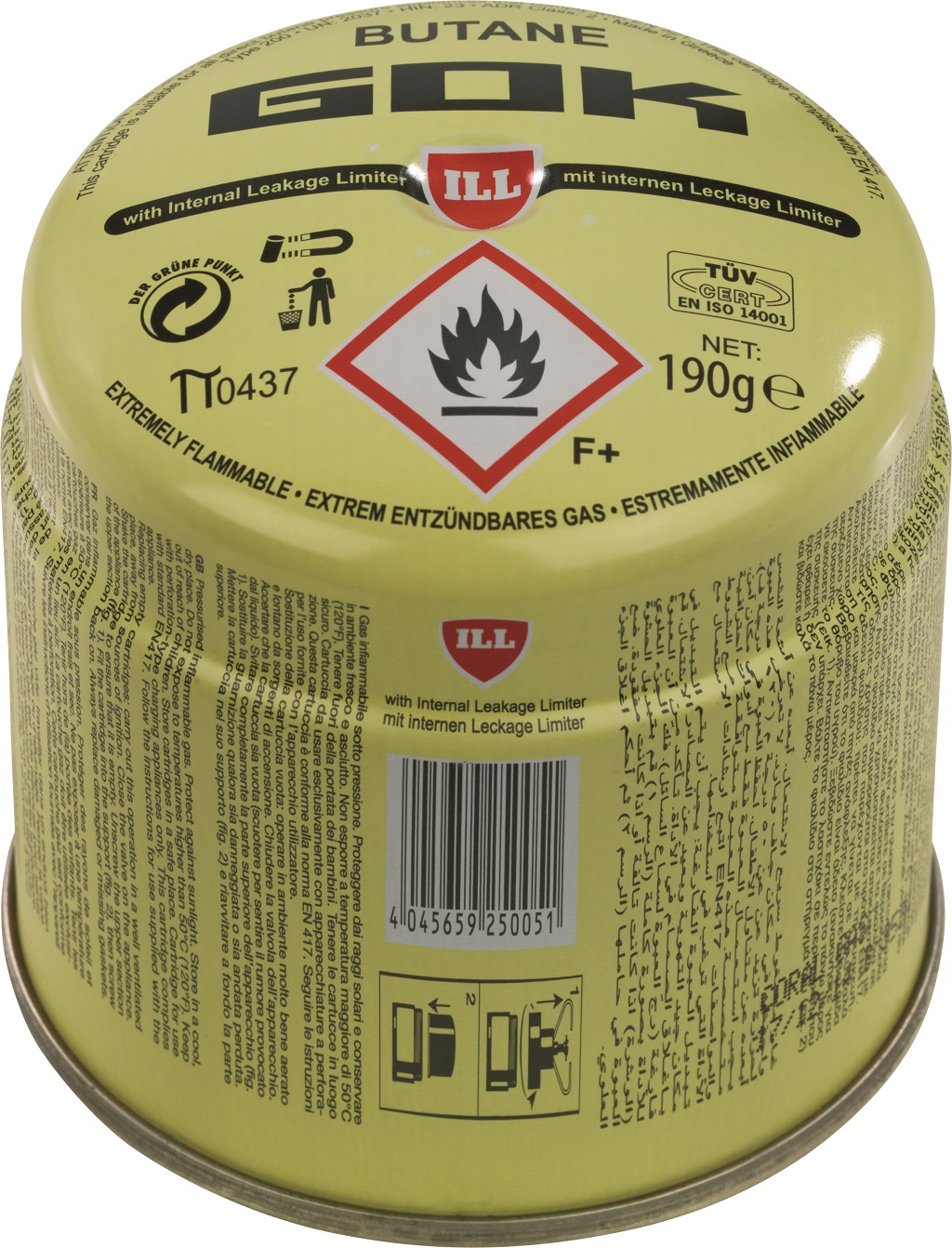
Gas cartridges are used in many areas of everyday life and leisure. They are particularly common in camping, outdoor cooking, mobile heating appliances, soldering work and in gas barbecues or tabletop cookers.
The most common fields of application include:
-
Camping and gas cookers for tent holidays, motorhomes or bivouacs
-
Gas-operated heating appliances (e.g. radiant heaters or tent heaters)
-
Barbecues with a cartridge connection
-
Mobile soldering and heating tools for DIY or professional use
-
Emergency equipment for self-sufficient heat and energy supply
Especially in mobile use, cartridges impress with their low weight and ease of handling. However, flexible use also increases the risk of improper storage – particularly after use, for example when a half-full cartridge is returned to the basement.
Therefore, the following applies: Whether on a camping trip or in the workshop – even after use, the gas cartridge must be stored correctly and safely.
You are currently viewing a placeholder content from Youtube. To access the actual content, click the button below. Please note that doing so will share data with third-party providers.
Why gas cartridges do not belong in the basement
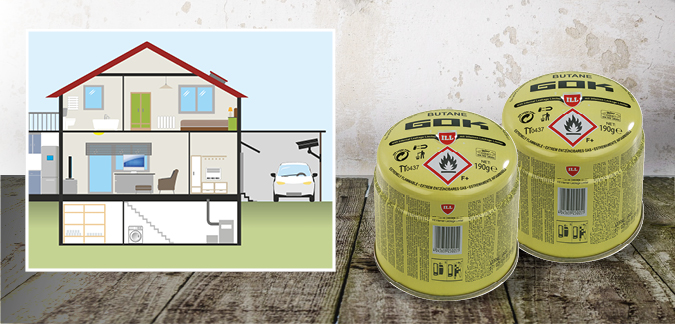
Basements are considered rooms below ground level. As escaping liquefied gas is heavier than air and collects at the lowest point in the event of a leak, there is a particularly high risk of explosion.
The Technical Rules for Liquefied Gas (TRF) as well as Worksheet G 612 of the DVGW therefore prohibit the storage of gas cartridges in basements or comparable areas below ground level – regardless of whether they are used privately or commercially.
Particularly critical: In the event of a gas leak, liquefied gas can accumulate near the floor, form an ignitable mixture with the surrounding air and be ignited by small ignition sources – such as light switches, heaters or electrical devices – leading to an explosion. These risks also apply to seemingly “dry” or rarely used basements.
Therefore, the rule is: The basement is fundamentally unsuitable as a storage location for gas cartridges and gas cylinders alike – from both a technical and a legal perspective.
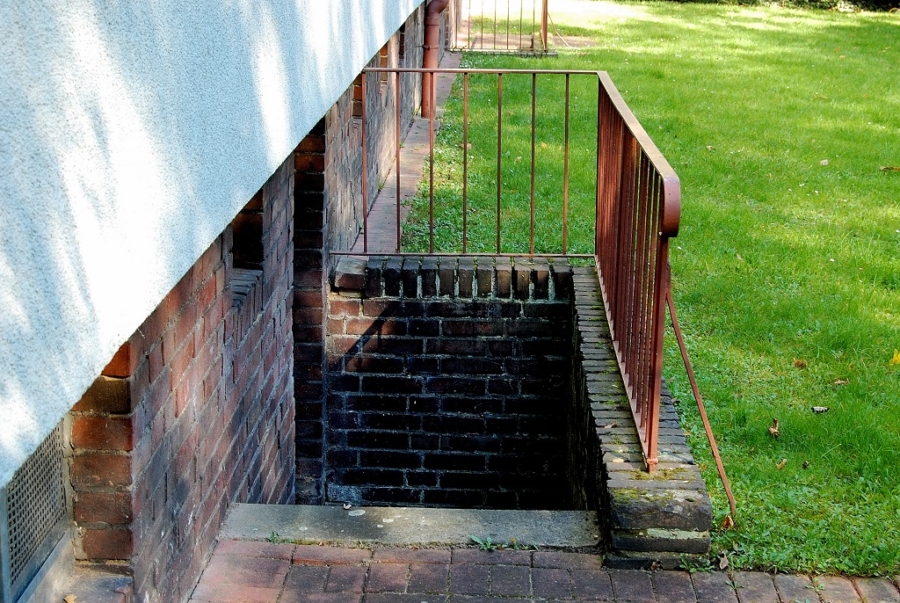
Rooms below ground level are completely unsuitable for the storage of gas cartridges. Anyone who acts negligently here is taking a serious risk!
What is permitted when storing gas cartridges in buildings?
May I store gas cartridges in a building? Yes, this is permitted – but only under certain conditions.
According to Worksheet G 612 of the DVGW, a maximum of two gas cartridges may be stored in living spaces – however, not both in the same room. The rule is: a maximum of one gas cartridge per room. Suitable rooms include, for example, well-ventilated utility rooms, garages with natural ventilation or storage rooms with sufficient air circulation – always above ground level. Living spaces such as living rooms or bedrooms are not intended to be used as storage locations.

Gas cartridges have no place in bedrooms. Be sure not to store them in there.
In addition, the following applies: Gas cartridges must be secured against falling over, must not be exposed to direct heat sources and must be mechanically undamaged and technically leak-tight. No hazardous explosive atmospheres exist provided that the tightness of the cartridge valve or the closed cylinder shut-off valve has been verified, for example using foaming agents (soapy water or leak detection spray). However, if possible, gas cartridges and gas cylinders should always be stored outside the building, for example in a well-ventilated tool shed or garden shed.
Technical and legal requirements for storage
The most important regulations governing the storage of gas cartridges in private settings are derived from Worksheet G 612 of the DVGW and the Technical Rules for Liquefied Gas (TRF). These regulations clearly define the conditions under which gas cartridges may be stored indoors.
Both sets of rules clearly exclude rooms below ground level and provide detailed requirements regarding ventilation, installation conditions, the maximum permitted quantity and safety-relevant aspects such as positioning and distance from heat sources.
Important: These regulations apply regardless of whether the gas cartridges are currently in use or are intended solely for storage – the safety framework is identical in both cases.
How to store gas cartridges safely and in a practical manner
Not only legal requirements apply to the storage of gas cartridges – practical safety aspects also play a decisive role. The following recommendations help to minimise risks effectively in everyday use:
-
Store upright only: The gas cartridge should always be stored in a vertical position. This reduces the risk of leakage at the valve.
-
Store in a cool and dry place: Ideally, ambient temperatures should be between 10 and 25 °C. High temperatures can dangerously increase the pressure inside the container.
-
Do notnot store near heat sources: Radiators, ovens, direct sunlight or other heat sources must be avoided.
-
Choose well-ventilated rooms: Fresh air supply ensures that any escaping gas does not remain in a hazardous concentration.
-
Store accessibly but child-safe: The storage location should be easy to inspect but protected against unauthorised access.
In addition, ensure that only undamaged and leak-tight cartridges are stored. If leaks at the valve, corrosion or mechanical damage are detected, the cartridge must no longer be used or stored.
Anyone who frequently handles gas cartridges – for example in workshops, camping or retail – should also plan regular visual inspections and, if necessary, use a separate, ventilated storage system.
You are currently viewing a placeholder content from Youtube. To access the actual content, click the button below. Please note that doing so will share data with third-party providers.
FAQ: Frequently asked questions about storing gas cartridges
May I store gas cartridges in the basement?
No. Basements are considered rooms below ground level. As liquefied gas is heavier than air, gas can collect near the floor in the event of a leak – the risk of an explosion is high. The TRF and DVGW Worksheet G 612 clearly exclude storage in the basement.
How many gas cartridges may I keep in the house?
In living spaces, a maximum of two gas cartridges are permitted – but only one per room. This regulation applies in accordance with Worksheet G 612 of the DVGW.
Which rooms are suitable for storing gas cartridges?
Suitable rooms are well-ventilated, dry rooms above ground level – for example utility rooms, garages with ventilation or tool sheds. Living rooms, bedrooms or basements are unsuitable.
What temperature is optimal for storage?
Between 10 and 25 °C. Heat sources or strong temperature fluctuations must be avoided at all costs, as they increase the pressure inside the container.
How can I tell whether a gas cartridge is still safe?
The cartridge should be undamaged, free from corrosion and leak-tight. Check the valve and container regularly. In the event of leaks, it must neither be used nor stored.
Are there differences between storing gas cylinders and gas cartridges?
No – with regard to storage conditions such as ventilation, temperature, positioning and the exclusion of basements, essentially the same requirements apply.