If you need a lot of LPG and a stable supply for it, you often can’t do without a multiple cylinder system, for example, consisting of four 33 kg cylinders. Even if there are different variations of such a four-cylinder system, the basic structure is always very similar. In this blog article, we will show you and highlight the most important points.
Views:134
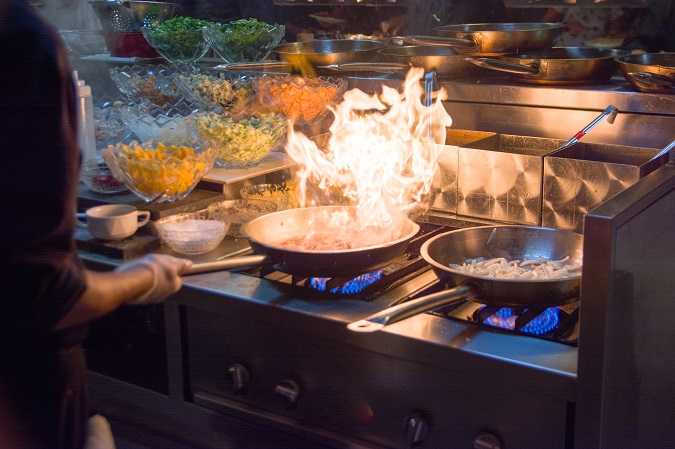
The requirement: A stable energy supply for gas stoves and hobs in the host’s kitchen. The solution: A four-cylinder system consisting of 33 kg gas cylinders. Because the operator really doesn’t want to have to constantly replace the gas cylinders when they’re operating continuously. However, before the final start-up of the system, the user or the system constructor should deal with the details in a targeted manner, especially with the combination of the components of the cylinder system.
Most multiple cylinder systems consist of two sides: Operation and reserve. The designation is basically self-explanatory, because LPG is taken from one side of the system; the other is therefore considered to be a reserve when the operating cylinders are empty.
This is the classic structure of a four-cylinder system. For the sake of completeness, however, it should also be mentioned that not only one variant exists. It is also possible, for example, to do without the operating and reserve sides and draw LPG from all four cylinders at the same time. In the following, however, we concentrate mainly on the “classic” of the multiple cylinder systems and its structure.
“Classic” four-cylinder system with manual changeover valve and operating and reserve side.
Pressure regulator
The heart of each four-cylinder system is the pressure regulator, also often referred to as a pressure reducer. As the name suggests, it regulates the uncontrolled high gas pressure that comes from the cylinders to the nominal pressure of the connected consumer equipment, such as gas boiler or gas stove.
The pressure regulators for four-cylinder systems with 33 kg gas cylinders absolutely require two safety devices: a so-called OPSO (overpressure shut-off device) and a PRV (pressure regulating valve). The standard for large cylinder systems is a pressure reducer with an outlet pressure of 50 mbar (millibar) and a capacity of 4 kg/h (kilograms per hour), which corresponds to a nominal capacity of around 51 kW (kilowatts).
Even if the pressure regulator is the central component, the changeover valve is almost just as important for four-cylinder systems. The user can choose between an automatic and manual changeover valve or a double shut-off block.
Automatic changeover valve AUV
The difference should be clear: For the former, the system automatically changes from operation to reserve; for the manual changeover valve or double shut-off block, the operator must do this themselves. A clear advantage of the automatic system: There is no interruption during the transition from operation to reserve. The special feature of the double shut-off block is that it is possible to draw gas simultaneously from all four cylinders – i.e. the operating and reserve side can “melt” with each other.
Gas hose
While the user requires pressure regulators and changeover valves in four-cylinder systems, they also need a total of four hose assemblies. They establish the connection between the individual 33 kg cylinders and the pipe system.
Since they are connected directly to the large cylinder, the gas hoses in turn must be suitable for the high pressure range (pressure-resistant up to and including 30 bar).
Four-cylinder system pipe system
In order to connect the large cylinders with changeover valve and pressure regulator or the downstream piping, some pipe sockets, adapters and compression fittings are required.
As putting these together can quickly become a Sisyphean task, we have designed finished sets for four-cylinder systems. These contain all described components such as pressure regulators, changeover valves, gas hoses and the complete pipe system for the supply system:
For simultaneous withdrawal: Four-cylinder system with double shut-off block: order number 05 080 00
Excess flow valve and ball valve
The design of the four-cylinder system in households (TRF) is complete with an excess flow valve and a ball valvewith a thermal shut-off device TAE for indoors. These two components are not part of the sets for the four-cylinder system.
These must be selected individually when designing the four-cylinder system: Ball valve (left) and excess flow valve (right).
Withdrawal output
Finally, information about withdrawal: even if it’s theoretically possible to have an output of up to 4 kg/h via the pressure regulator, the user or the system planner should pay attention to the maximum withdrawal output of 33 kg cylinders and the different withdrawal scenarios.
Important note
Please note that the planning or work on the system described above may only be carried out by a qualified person.
The articles are written by specialist authors in the fields of LPG, fuel oil, liquid media, tank management and safety engineering, who contribute their expertise from product management, development, technical customer support, training and standardisation activities.
The members of the editorial team have many years of practical experience in the planning, application and further development of technical solutions for the safe supply of LPG and liquid fuels. Several authors are actively involved in specialist committees and working groups of the DVGW, DVFG and figawa, as well as in national and European standardisation committees. The team includes, among others, experts certified in accordance with G 607 and G 608, competent persons in accordance with the TRF, and specialists who contribute to the development and evaluation of technical regulations and industry standards.
In addition to providing information about GOK products and solutions, the editorial team focuses on sharing knowledge relating to safety, regulations, maintenance, operation and future technologies in the field of LPG and liquid media.
Share this post
Related articles
How do I find out the number of cylinders required for an LPG cylinder system?
Home & Commercial
Why is a butane or propane gas cylinder never filled to 100 percent?
Safety
You might also find this interesting
How does a PRV pressure relief valve work?
Camping & Leisure, Home & Commercial, Safety
Which pressure regulator do I need for which output?
Camping & Leisure, Grill & BBQ, Home & Commercial
How do I know when I need to replace the components of my LPG system?
Camping & Leisure, Grill & BBQ, Home & Commercial
Where can I find operating manuals for GOK products?
Camping & Leisure, Grill & BBQ, Home & Commercial, Tank & Liquid Media
From what length of hose assembly do I need an excess flow device?
Camping & Leisure, Grill & BBQ, Home & Commercial
Which pressure regulator connections exist for LPG cylinders in Europe?
Camping & Leisure, Grill & BBQ, Home & Commercial
How can I release an OPSO (SAV)?
Home & Commercial
What is an OPSO (SAV) and how does it work?
Home & Commercial
Does the pressure regulator gauge show the filling level of the LPG cylinder?
Camping & Leisure, Grill & BBQ, Home & Commercial
Does the gas have to be discharged out of the line before releasing the OPSO (SAV)?
Home & Commercial
How do I carry out a simplified leak check on an LPG cylinder system?
Camping & Leisure, Grill & BBQ, Home & Commercial
What is the heating value of media such as fuel oil, LPG and natural gas?
Home & Commercial, Tank & Liquid Media
This blog will never ask members of the public or unqualified persons to make changes to or fiddle around with technical systems themselves.
In accordance with the Industrial Safety Regulation (BetrSichV), a qualified person must take care of a system which requires monitoring.
A qualified person is someone who has the specific specialist knowledge required. This knowledge is gained by way of a professional apprenticeship, corresponding professional experience or current occupational activity.
Please note that the texts are based on information, regulations and standards for Germany. Please always check the rules and regulations in the relevant country of destination and consult specialists if necessary.