
Many people know the name and will have heard it in connection with the fuel oil system. But you will be much less familiar with the function of the limit indicator or what it protects you from.
Inhaltsverzeichnis
Many people know the name and will have heard it in connection with the fuel oil system. But you will be much less familiar with the function of the limit indicator or what it protects you from.
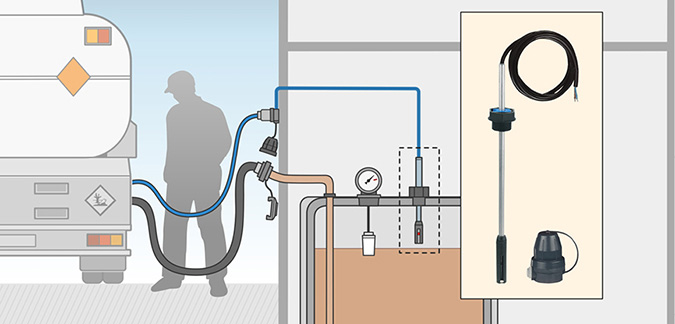
A large proportion of the owners of fuel oil systems have already seen it, some people are familiar with the name, but most people aren’t familiar with how the limit indicator works. The safety fitting protects tanks from overfilling, thus also protecting their environment. The limit indicator works according to the principle of a temperature-dependent electrical PTC resistor – also known as PTC thermistor.
Many are still relying on oil heating and all its benefits. Something that should never be missing from any tank is the limit indicator. It is the most important safety device in the system, and it prevents the tank from overfilling. It does it like this:
The mineral oil retailer’s tank truck driver comes to deliver. He creates an electrical connection between the limit indicator and the tank truck. Before he can fill, however, he must first check the functionality of the limit indicator with its overfill prevention. The applied voltage ensures that the PTC thermistor is heated up. If the safety device passed the test successfully, there is nothing preventing the filling process.
As soon as fuel oil reaches the PTC resistor, this changes the current in the electric circuit between the limit indicator and the control unit on the tank truck. Within a very short time, this change causes the filling process to be stopped and no more fuel oil flows into the tank.
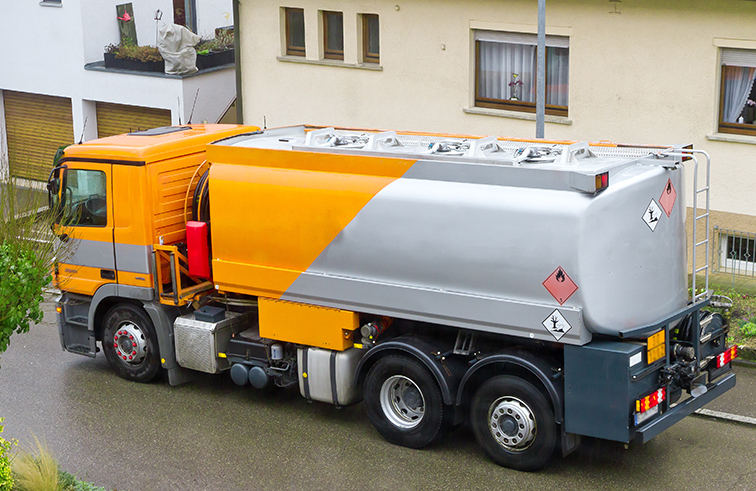
Now, you could think that every filling process could be carried out like this, out of convenience: The tank truck driver simply waits until the contact between the fuel oil and the PTC thermistor initiates the shut-down, loosens the plug connection and drives on. But be careful: It is prohibited to deliberately fill up the tank until the limit indicator responds!
The limit indicator (see image) is a safety device and should only intervene in an emergency; this must not be the norm during filling. The tank truck driver must check how many litres fit into the tank before filling. In doing so, he must assume that the limit indicator will not respond.
For example, in the case of above-ground tanks, limit indicators are set in such a way that they respond to a maximum of 95 percent by volume during filling. An example: Let’s assume you have a tank with a total volume of 10,000 litres. The limit indicator is installed such that the tank cannot be filled with more than 9,500 litres, i.e. 95 percent by volume.
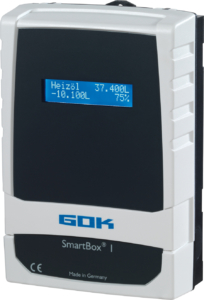
Further information on limit indicators from GOK can be found here: limit indicator type GWD and type GWS. In this publication you will find all relevant information on limit indicators: Technical datasheet “limit indicator (GWG) for fuel oil consumer installations”.
This blog will never ask members of the public or unqualified persons to make changes to or fiddle around with technical systems themselves.
In accordance with the Industrial Safety Regulation (BetrSichV), a qualified person must take care of a system which requires monitoring.
A qualified person is someone who has the specific specialist knowledge required. This knowledge is gained by way of a professional apprenticeship, corresponding professional experience or current occupational activity.
Please note that the texts are based on information, regulations and standards for Germany. Please always check the rules and regulations in the relevant country of destination and consult specialists if necessary.


