The Building Modernisation Act significantly changes the landscape for heating systems and heating system modernisation in existing buildings: gas, oil and LPG heating systems remain available options, but are tied to increasing proportions of climate-friendly fuels. This brings tank-based solutions, bio-LPG, bio-oil and renewable substitutes such as DME and rDME into sharper focus for property owners, specialist trades and energy suppliers.
Post Views:5
What has changed since March 2026?
Can an oil or LPG heating system continue to be operated in 2026 and beyond? If so, does the heating system need to be modernised? And what applies if the natural gas network in a region is expected to be decommissioned or repurposed? These are questions that many owners of existing buildings ask time and again. Since spring 2026, the legal situation has evolved significantly at the political level: the Building Modernisation Act, or GModG for short, was passed by the German Bundestag on 10 July 2026 and cleared the Bundesrat on the same day without referral to the Mediation Committee.
It is important to classify the position precisely for ongoing projects: as at 23 July 2026, according to the available official procedural information, the Act had completed the parliamentary process, but its first provisions will not enter into force until the day after promulgation in the Federal Law Gazette. Until then, the existing Building Energy Act formally remains authoritative. Nevertheless, the implications for planning are clear: the political and legal framework is shifting away from a rigid technology requirement towards a modernisation approach that focuses more strongly on fuels.
From the Heating Act to the GModG: more freedom of choice, but not a free-for-all
At the heart of the new approach is a move away from the existing 65 per cent rule (every heating system must be operated with at least 65 per cent renewable energy). Under the adopted GModG, various technical solutions are once again to be explicitly permitted: heat pumps, heat networks, solar thermal energy, biomass and hybrid solutions, combined heat and power (CHP) systems, direct electric heating subject to strict conditions, as well as gas, oil and LPG heating systems.
However, this opening-up does not mean that existing oil and gas heating systems can continue to be operated without modification.
Anyone using a gas, oil or LPG heating system in an existing building will in future have to ensure that an increasing proportion of climate-friendly fuels is used. This means that it is not the heating technology, but the energy source used that becomes the decisive factor in modernisation.
This distinction is important for owners and specialist planners. There is rarely one ideal solution for existing buildings. Insulation standards, heat emitters, available infrastructure, investment budgets, listed-building requirements and regional heat planning can vary greatly. The GModG takes greater account of this reality, but at the same time requires a robust fuel strategy.
The biofuel ladder: what new oil, gas and LPG heating systems will have to deliver in future
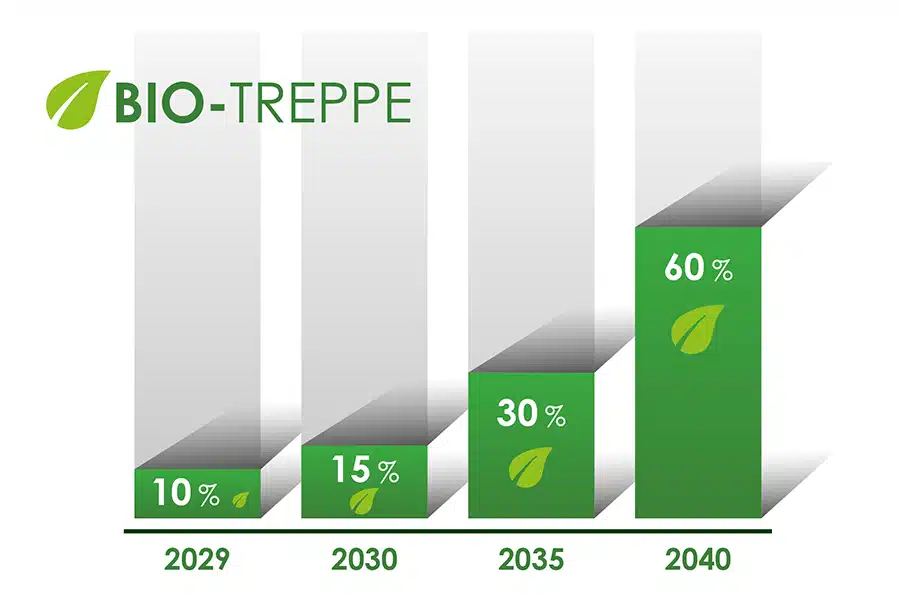
For gas, oil and LPG heating systems in existing buildings, the adopted GModG provides for a phased obligation to use more climate-friendly fuels. Under the model adopted during the parliamentary process, the prescribed proportion increases in four stages:
from 1 January 2029: at least 10 per cent
from 1 January 2030: at least 15 per cent
from 1 January 2035: at least 30 per cent
from 1 January 2040: at least 60 per cent
The fuels mentioned include biomethane, biofuel oil, biogenic LPG and certain types of hydrogen, including derivatives. This so-called biofuel ladder is particularly relevant to tank-based solutions because it does not fundamentally exclude the existing infrastructure. Instead, the key questions are which fuels are available, how their use can be demonstrated, and whether the system, components and manufacturers’ approvals are suitable for the particular application.
In addition, the GModG includes a mandate for a further law on green gas and green fuel oil quotas. The Federal Government is to submit a corresponding proposal by 1 December 2026. The aim is to organise the ramp-up of climate-friendly fuels on the supply side and to make the fuels fully climate-neutral by 2045. This is a strong signal for investment decisions, but it is not yet a fully formulated market regulation.
Why LPG could become more important in existing buildings
LPG has a structural advantage in existing buildings: it is independent of the grid. The energy is stored in a tank on site and delivered as required. This is relevant where there is no heat network, the future of a natural gas connection is uncertain, or switching to a heat-pump-only solution would require substantial structural work.
The debate about the possible decommissioning or repurposing of natural gas distribution networks, or their becoming increasingly uneconomical, reinforces this point. If the number of gas network customers falls, network charges and future supply prospects may come under greater scrutiny. LPG is not dependent on these networks.
For detached and semi-detached houses, agricultural buildings, smaller commercial units or remote existing properties, this can be an important consideration.
Biogenic LPG makes this role more future-proof. Bio-LPG is chemically comparable to conventional LPG and can in principle play a role in existing supply infrastructures. At the same time, substitutes and blending components such as DME or rDME are being discussed as renewable building blocks. However, standardisation, material compatibility, manufacturers’ approvals and safety-related design are crucial for higher blends or specific applications.
Fuel oil remains part of the modernisation landscape, but with new requirements
Nor will fuel oil automatically disappear from existing buildings as a result of the GModG; fuel oil offers the same advantages as LPG (independence from the grid and on-site storage). In certain existing buildings, modern oil condensing technology can therefore continue to be a realistic option, particularly if the tank compartment, pipework and safety components are in place and in good technical condition.
However, future viability depends more heavily on the fuel than before. Biofuel oil and, in the future, other renewable or synthetic liquid fuels such as HVO can reduce the fossil share.
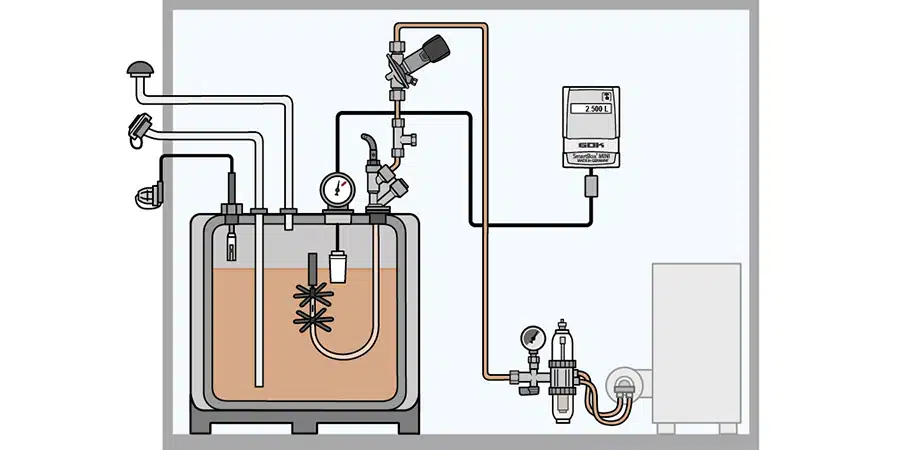
It remains crucial that the products used comply with the requirements and are suitable for the system. Operators should therefore consider more than just the heat generator and also have the tank, withdrawal system, filters, limit indicator, anti-siphon device and other safety-relevant components checked.
For specialist installers, this means that modernising a heating system with fuel oil or LPG will in future require more explanation and evidence. Alongside efficiency and investment, the fuel pathway, availability, documentation and technical suitability of the overall system will be important.
LPG systems and fuel oil systems
Knowledge about conventional heat generation systems
Heat pump, hybrid or tank-based solution: the specific building is what matters
The heat pump remains a very good solution in many cases, particularly in well-insulated buildings with low flow temperatures. In unrenovated or only partially modernised existing buildings, however, the decision is more complex. Old radiators, high system temperatures, limited installation space, noise protection issues or restricted electrical connection capacities may necessitate additional measures.
In such cases, hybrid solutions or modern condensing systems using LPG or fuel oil can provide a technically robust transitional or permanent solution, particularly if existing tank infrastructure can continue to be used and the future fuel pathway is considered at an early stage.
Sound planning should therefore not begin with a blanket preference for one solution, but with an assessment of the building:
heat demand, heat emitters and required flow temperature
condition of the storage system and tank, flue system and existing pipework
space available, investment framework and regional heat planning
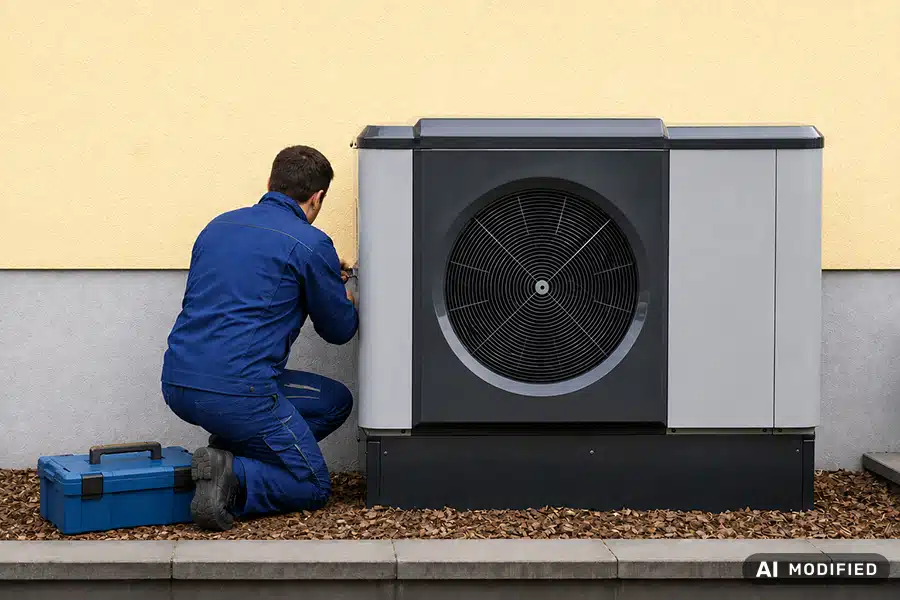
Although heat pumps are on everyone’s lips, they are not always the right solution. It is important for installers and homeowners to carry out a realistic assessment of the existing building. AI-generated image
Funding and costs: take account of the new BEG rules in force since July 2026
Alongside the GModG, the funding conditions under the Federal Funding for Efficient Buildings scheme were also amended. Since 21 July 2026, KfW has continued to specify a basic subsidy of 30 per cent for heating system modernisation.
New or more precisely defined maximum funding amounts apply to residential buildings: EUR 28,000 for the first residential unit, EUR 15,000 for each of the second to sixth residential units and EUR 8,000 for each additional residential unit.
The efficiency bonus and emissions reduction supplement have been abolished. The climate speed bonus is 16 per cent and will decrease by four percentage points every six months from 1 February 2027. The income bonus for owner-occupiers is more strongly tiered; under certain conditions, the funding ceiling can reach up to 80 per cent of eligible costs.
For standard fossil-fuel solutions, this does not amount to carte blanche. Legal permissibility, funding and long-term operating costs must be assessed separately. Particularly in the case of new oil, gas or LPG heating systems, owners must factor future fuel proportions, price trends, CO₂ costs and documentary evidence into their calculations.
Safe tank supply: the components between the tank and the heat generator matter
When modernising a tank-based heating system, it is not only the boiler that determines operational safety and future viability. The technology between the tank and the heat generator is equally important.
Older systems in particular should be checked not only for functionality, but also for their condition, approval, sizing and suitability for potential fuel variants.
This is where specialist installers and component manufacturers make a key contribution. Control and safety equipment must be suitable for the medium, pressure range and application. GOK is therefore working to make its products fit for the future, for example in the field of oil firing installations with BIO- and GREEN-FUELS-READY markings and by testing components for Bio-LPG, DME or rDME. Specific technical approval for the particular application always remains decisive.
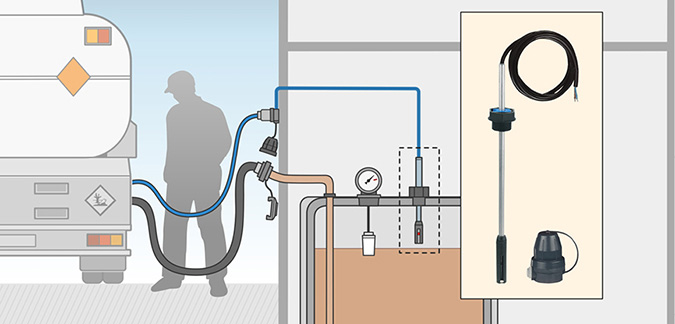
One factor that should not be underestimated when modernising a heating system is the quality and condition of the components used, such as the anti-siphon device, filter, withdrawal valve and limit indicator.
Conclusion: LPG, Bio-LPG and renewable substitutes are becoming more important
Heating system modernisation in 2026 is becoming more open to different technologies, but not simpler. The Building Modernisation Act broadens the range of choices for existing buildings and makes it clear that oil, gas and LPG heating systems are not being forced out of the market across the board. At the same time, the benchmark is changing: a solution is only fit for the future if efficiency, the fuel pathway, documentary evidence and operational safety work together.
This development is particularly relevant to LPG. Grid-independent supply, existing tank infrastructure, biogenic LPG and renewable substitutes such as DME or rDME can be important building blocks for a realistic transition to sustainable heating in existing buildings. However, the way forward does not lie in blanket promises, but in professional planning, suitable components and a clear assessment of the applicable legal requirements.
The articles are written by specialist authors in the fields of LPG, fuel oil, liquid media, tank management and safety engineering, who contribute their expertise from product management, development, technical customer support, training and standardisation activities.
The members of the editorial team have many years of practical experience in the planning, application and further development of technical solutions for the safe supply of LPG and liquid fuels. Several authors are actively involved in specialist committees and working groups of the DVGW, DVFG and figawa, as well as in national and European standardisation committees. The team includes, among others, experts certified in accordance with G 607 and G 608, competent persons in accordance with the TRF, and specialists who contribute to the development and evaluation of technical regulations and industry standards.
In addition to providing information about GOK products and solutions, the editorial team focuses on sharing knowledge relating to safety, regulations, maintenance, operation and future technologies in the field of LPG and liquid media.
Share this post
Related articles
How does a limit indicator work?
Tank & Liquid Media
Can I operate a gas stove or gas hob with LPG instead of compressed natural gas (CNG)?
Home & Commercial
Is liquefied petroleum gas (LPG) a viable energy source for residential and commercial properties in the future?
Home & Commercial
Gas Cooker with Propane Indoors: Regulations, Connection & Safety
Home & Commercial, Safety
FAQ: Frequently asked questions about heating system modernisation in 2026
Under the adopted GModG, new oil-, gas- and LPG-fired heating systems will generally remain permitted in existing buildings. However, the exact date on which the Act enters into force, transitional rules and the future biofuel ramp-up schedule for climate-friendly fuel proportions must be taken into account.
The biofuel ramp-up schedule sets out progressively increasing mandatory proportions of climate-friendly fuels for new gas-, oil- and LPG-fired heating systems in existing buildings: 10 per cent from 2029, 15 per cent from 2030, 30 per cent from 2035 and 60 per cent from 2040.
The GModG explicitly identifies biogenic LPG as a climate-friendly fuel pathway. In the longer term, it could strengthen existing LPG infrastructure, provided that availability, verification requirements and technical approvals are in place.
Not in every case. DME and rDME are considered promising renewable substitutes or blending components. However, their use depends on standards, material compatibility, system design and manufacturers’ approvals.
No. Heat pumps often make sense, but they must be suitable for the building. High flow temperatures, old heat emitters or limited structural options can make hybrid or tank-based solutions economically and technically attractive in individual cases.
You might also find this interesting
When do I need a diaphragm-controlled anti-siphon device?
Tank & Liquid Media
Where can I find operating manuals for GOK products?
Camping & Leisure, Grill & BBQ, Home & Commercial, Tank & Liquid Media
What is the heating value of media such as fuel oil, LPG and natural gas?
Home & Commercial, Tank & Liquid Media
How can I check the functionality of the limit indicator?
Tank & Liquid Media
How does a limit indicator work?
Tank & Liquid Media
What are the differences between protection types IP54 and IP65?
Tank & Liquid Media
How do I get checkable dry-run protection for AdBlue® systems?
Tank & Liquid Media
What’s new with the BC-2 overfill prevention device from GOK?
Safety, Tank & Liquid Media
Is a filling level gauge available for water tanks, oil tanks and cisterns?
Tank & Liquid Media
How can the filling level of heating oil or rainwater be monitored digitally via an app?
Tank & Liquid Media
SmartBox AIR Wi-Fi: How to Install and Commission
Safety, Tank & Liquid Media
This blog will never ask members of the public or unqualified persons to make changes to or fiddle around with technical systems themselves.
In accordance with the Industrial Safety Regulation (BetrSichV), a qualified person must take care of a system which requires monitoring.
A qualified person is someone who has the specific specialist knowledge required. This knowledge is gained by way of a professional apprenticeship, corresponding professional experience or current occupational activity.
Please note that the texts are based on information, regulations and standards for Germany. Please always check the rules and regulations in the relevant country of destination and consult specialists if necessary.