Whether in a motor caravan, caravan, or van – camping and LPG go hand in hand. LPG is an efficient and safe energy source when the right precautions are taken. In this article, we present the five most important safety devices and safety aspects for LPG systems and explain in detail how they work and why they are so important.
Post Views:102
Whether in a motor caravan, caravan, or van – camping and LPG go hand in hand. LPG is an efficient and safe energy source when the right precautions are taken. In this article, we present the five most important safety devices and safety aspects for LPG systems and explain in detail how they work and why they are so important.
1.The crash sensor: your guardian angel in accidents
The crash sensor is an indispensable safety device, especially if you want to use gas appliances while driving. Only with the crash sensor on board are campers allowed to operate appliances like refrigerators or gas heaters while driving. The crash sensor is an integral part of gas pressure control systems, such as the Caramatic DriveTwo or the Caramatic SafeDrive PLUS.
Functionality:
The GOK crash sensor is based on a pendulum solution. During normal operation, the pendulum keeps a spring-loaded sealing unit open, allowing gas to flow. In the event of an accident or strong impact (from about 15-20 km/h impact speed), the pendulum changes position. This causes the sealing unit to move down and immediately block the gas flow.
Consequences of neglect:
Without a crash sensor, gas could escape uncontrollably in an accident, leading to an increased risk of fire or even an explosion.
2.The hose rupture safety device: protection against hose ruptures
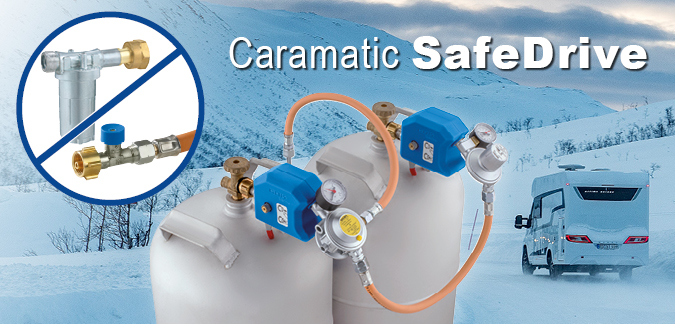
This device protects you from the consequences of a hose rupture. It is mandatory in camping vehicles if you want to operate gas appliances while driving and use gas pressure control systems with a crash sensor, such as the Caramatic DriveOne or DriveTwo. The Caramatic SafeDrive does not require a hose rupture safety device.
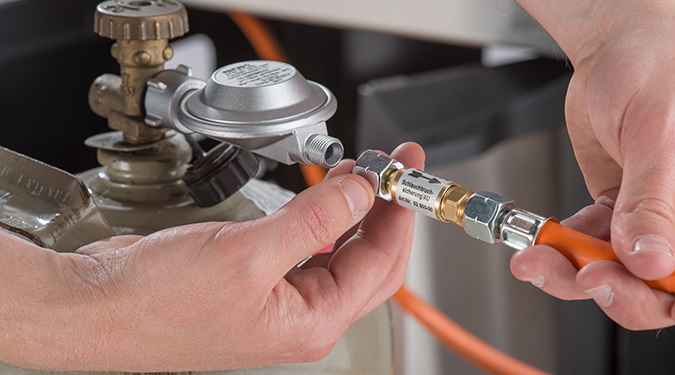
Important: The hose rupture safety device is also very useful for monitoring stationary LPG systems at the campsite. If you remove the gas cylinder from the vehicle, connect a pressure regulator with 50 mbar and a hose, and operate a gas grill, you should consider a retrofittable hose rupture safety device. For hose lengths over 1.5 meters, it is mandatory.
Functionality:
The hose rupture safety device reacts to a sudden increase in flow rate caused by a hose rupture or tear. It automatically interrupts the gas flow.
Consequences of neglect:
Without this safety device, a hose rupture could lead to uncontrolled gas leakage, resulting in a dangerous gas concentration in the environment.
3.The Gas Pressure Regulator: Ensuring the Correct Pressure in Your System
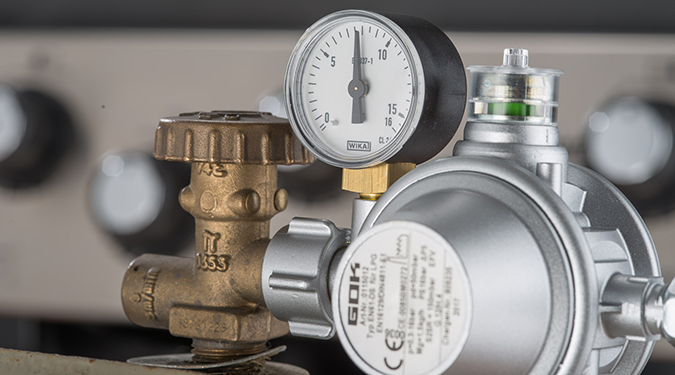
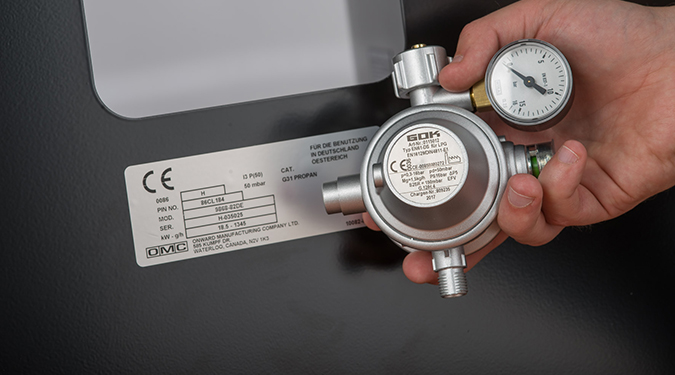
The gas pressure regulator reduces the high pressure from the gas cylinder to the typical operating pressure of 30 mbar or 50 mbar in camping vehicles. There isn’t just one pressure regulator (also called a pressure regulator), but different variants. However, almost all pressure regulators for camping vehicles have a built-in safety device, such as a safety relief valve PRV or an overpressure safety device S2SR.
Functionality:
The gas pressure regulator contains precisely matched mechanical components. Among other things, the valve lever, spring, and membrane ensure a constant pressure at the gas appliance. The high cylinder pressure of up to 16 bar is reduced by the pressure regulator to an optimal value of 30 or 50 mbar for gas appliances.
Consequences of neglect:
Without a regulator, you risk excessively high gas pressure, damaging appliances. This leads to malfunctions and ultimately to resulting dangers. Too low pressure could cause appliances to malfunction or even shut down, which is not ideal for a heater in winter.
Using the wrong pressure regulator or operating gas appliances without the necessary safety devices is negligent and partly illegal. This risks a lot, including the insurance coverage for the vehicle in case of an incident.
The top picture shows the system structure of the Caramatic SafeDrive: The pressure reducer with crash sensor (in the blue housing) is located directly on the gas cylinder. At the bottom of the picture is the structure with a wall-mounted gas pressure regulator, gas filters and the hose rupture safety devices directly on the gas cylinder.
4.Regular leak tests: prevention is better than cure
Regularly checking your entire gas system for leaks is essential for safety. It’s quick, costs nothing, and is easily done.
Functionality:
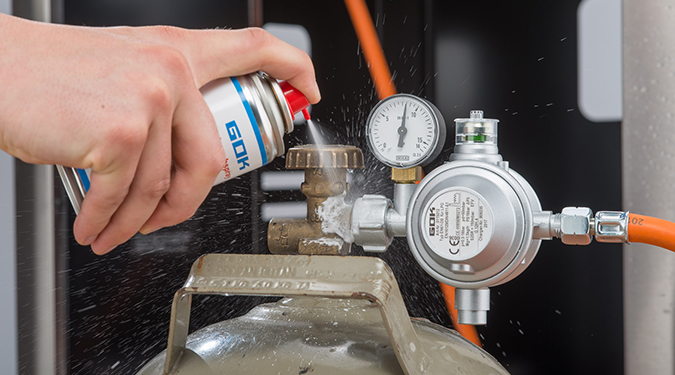
During a leak test, the entire gas system is pressurized, and then it is observed whether the pressure remains constant over a certain period. Additionally, all connections and fittings are checked for leaks using a leak detector spray or a water-soap mixture.
Consequences of neglect:
Undetected leaks could lead to a dangerous gas concentration in your vehicle, posing a health risk and, in the worst case, causing a fire or explosion.
5.The belt holder in the gas compartment: secure stand for your gas cylinders
The belt holder in the gas compartment ensures that your gas cylinders remain securely in place while driving.
Functionality:
The belt holder consists of robust straps that are placed around the gas cylinder and tightened. They prevent the cylinder from moving or tipping over while driving.
Consequences of neglect:
An unsecured gas cylinder could tip over during driving, damaging the connection or hose and causing a gas leak. Those who, thanks to the crash sensor, also withdraw LPG from the gas cylinder while driving should be particularly careful. If the gas cylinder tips over, liquid gas phase could enter the pipe system. The consequences can lead to damage to the pipe system and gas appliances.
Campers must secure gas cylinders in the gas locker with a belt holder to ensure safe transport while travelling.
Conclusion: These five safety devices form the backbone of a safe LPG system in your camping vehicle. If correctly installed and regularly maintained, they make the use of LPG while camping very safe. LPG is an efficient and reliable energy source that poses no danger when handled properly. Ensure that the mentioned components are present and functional in your system, follow the safety tips, and have regular maintenance and inspections – especially the G 607 inspection every two years – carried out by certified professionals. This way, you can enjoy your camping holiday worry-free – with the assurance of being well protected.
The articles are written by specialist authors in the fields of LPG, fuel oil, liquid media, tank management and safety engineering, who contribute their expertise from product management, development, technical customer support, training and standardisation activities.
The members of the editorial team have many years of practical experience in the planning, application and further development of technical solutions for the safe supply of LPG and liquid fuels. Several authors are actively involved in specialist committees and working groups of the DVGW, DVFG and figawa, as well as in national and European standardisation committees. The team includes, among others, experts certified in accordance with G 607 and G 608, competent persons in accordance with the TRF, and specialists who contribute to the development and evaluation of technical regulations and industry standards.
In addition to providing information about GOK products and solutions, the editorial team focuses on sharing knowledge relating to safety, regulations, maintenance, operation and future technologies in the field of LPG and liquid media.
Share this post
Related articles
Why don’t I need a gas filter or excess flow valve with the Caramatic SafeDrive?
Camping & Leisure, Safety
FAQ – Key safety devices for LPG systems in recreational vehicles
Gas appliances such as heaters or refrigerators may only be used while driving if a crash sensor is installed. It prevents uncontrolled gas leakage in the event of an accident.
It automatically shuts off the gas flow in the event of a hose rupture or sudden pressure drop – protecting against uncontrolled gas leaks.
Yes, especially for stationary LPG systems with hose lengths over 1.5 metres, a hose rupture protection device is even mandatory. It enhances safety when operating gas barbecues and similar appliances.
It reduces the high pressure from the gas cylinder to the operating pressure required for camping appliances – either 30 or 50 mbar – and protects appliances from damage caused by overpressure.
A missing or unsuitable regulator can cause appliance malfunctions, damage, or even dangerous situations. It may also void your insurance cover.
The system is pressurised and checked for leaks using leak detection spray or a soap solution. If the pressure remains constant, the system is considered leak-tight.
It keeps gas cylinders securely in place during transport. This prevents mechanical damage to connections and gas leaks caused by liquid gas entering the pipework.
You might also find this interesting
How can I use several LPG cylinders in the caravan, motor caravan or on the boat at the same time?
Camping & Leisure
How does a PRV pressure relief valve work?
Camping & Leisure, Home & Commercial, Safety
Which pressure regulator do I need for which output?
Camping & Leisure, Grill & BBQ, Home & Commercial
Are there any differences in the gas test of mobile homes or caravans and motor caravans?
Camping & Leisure
How do I know when I need to replace the components of my LPG system?
Camping & Leisure, Grill & BBQ, Home & Commercial
Where can I find operating manuals for GOK products?
Camping & Leisure, Grill & BBQ, Home & Commercial, Tank & Liquid Media
From what length of hose assembly do I need an excess flow device?
Camping & Leisure, Grill & BBQ, Home & Commercial
Which pressure regulator connections exist for LPG cylinders in Europe?
Camping & Leisure, Grill & BBQ, Home & Commercial
Does the pressure regulator gauge show the filling level of the LPG cylinder?
Camping & Leisure, Grill & BBQ, Home & Commercial
How do I carry out a simplified leak check on an LPG cylinder system?
Camping & Leisure, Grill & BBQ, Home & Commercial
How do I identify the year of manufacture of a pressure regulator from GOK?
Camping & Leisure, Grill & BBQ, Home & Commercial
How do I find out whether the nominal pressure on the pressure regulator and gas equipment match?
Camping & Leisure, Grill & BBQ, Home & Commercial
This blog will never ask members of the public or unqualified persons to make changes to or fiddle around with technical systems themselves.
In accordance with the Industrial Safety Regulation (BetrSichV), a qualified person must take care of a system which requires monitoring.
A qualified person is someone who has the specific specialist knowledge required. This knowledge is gained by way of a professional apprenticeship, corresponding professional experience or current occupational activity.
Please note that the texts are based on information, regulations and standards for Germany. Please always check the rules and regulations in the relevant country of destination and consult specialists if necessary.