Isn’t it the case that people who want to use the gas system in their motor caravan, caravan or motor home while driving, or who would prefer to leave the gas cylinder open all the time, need a crash sensor, an excess flow device and a gas filter? For most systems, yes – but not entirely with the Caramatic SafeDrive.
Post Views:109
Isn’t it the case that people who want to use the gas system in their motor caravan, caravan or motor home while driving, or who would prefer to leave the gas cylinder open all the time, need a crash sensor, an excess flow device and a gas filter? For most systems, yes – but not entirely with the Caramatic SafeDrive.
First of all: The crash sensor is certainly required, even with the Caramatic SafeDrive. This safety device is an integral part of the SafeDrive system. But that’s where the similarities with the standard systems on the market – such as the Caramatic DriveOne and DriveTwo from GOK – come to an end.
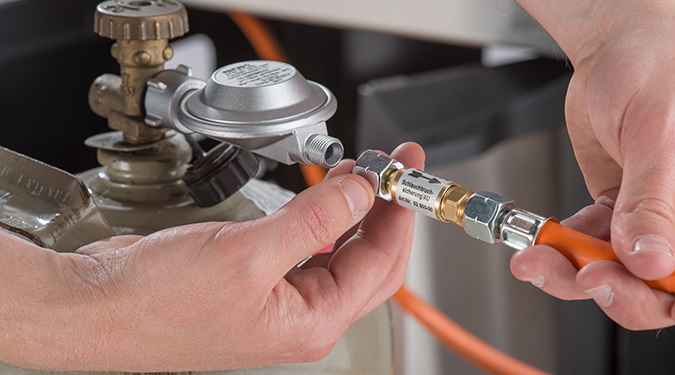
An excess flow device is a piece of equipment which monitors a gas hose. In “standard” systems, the safety device is combined with the high pressure hose assembly as a single unit. The camper connects both of these directly to the gas cylinder and connects the end to the gas filter and/or the pressure regulation system.
The crash sensor, which is integrated in the pressure regulation system, monitors the downstream piping system up to the connected gas equipment. This has been the system configuration for most standard systems until 2024.
New system concept
The modified system configuration is also the reason why the excess flow valve is now no longer necessary. With the Caramatic SafeDrive, the crash sensor is always located directly on the gas cylinder, and therefore monitors the entire downstream pipe system – including the hose and piping.
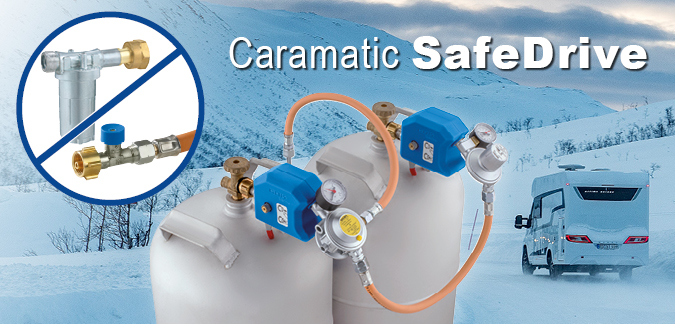
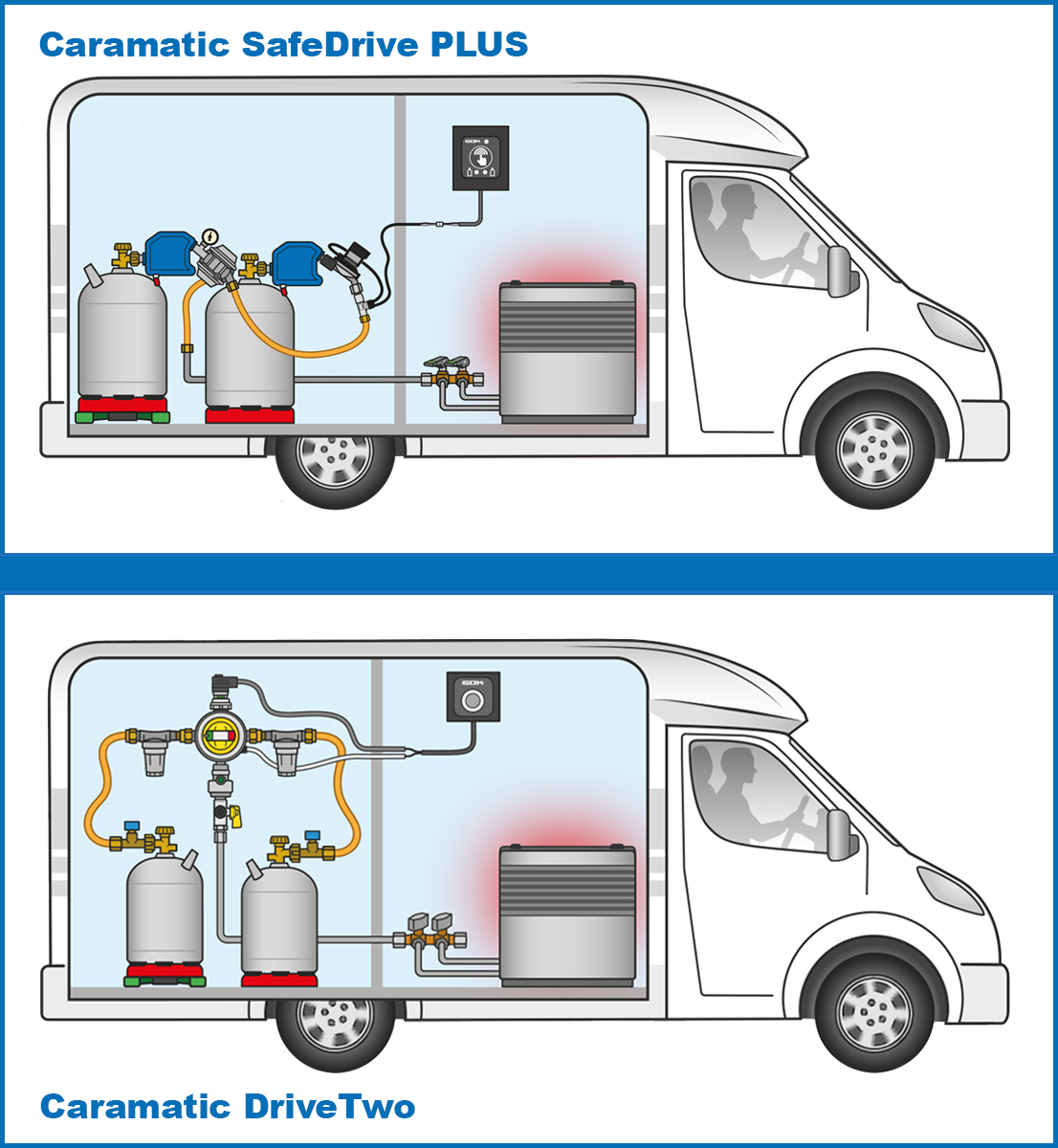
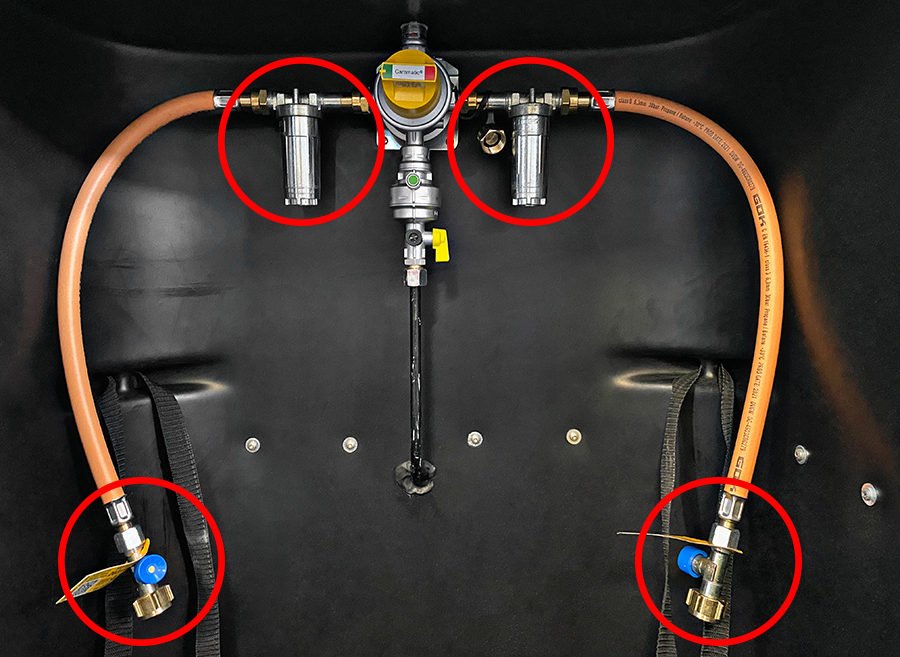
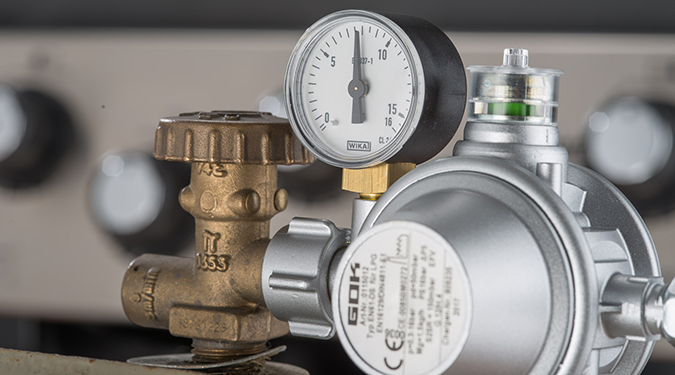
The image above shows the Caramatic SafeDrive system configuration: The pressure reducer together with crash sensor (in the blue housing) is located directly on the gas cylinder. The image below shows the configuration with a wall-mounted pressure regulation system, gas filters and the excess flow valve directly on the gas cylinder.
Why the gas filter?
With the DriveOne and DriveTwo systems (and the predecessor models for other manufacturers), we discovered oily residues and soiling inside the pressure regulation systems. This resulted in malfunctions and occasionally, system failure.
We developed the gas filters to keep these residues and contaminants away from the systems. They have significantly improved this situation.
Why no gas filter with the SafeDrive?
As noted above for the excess flow valve, it is largely due to the new system design that the gas filter is no longer necessary.
Connecting the pressure regulator directly to the gas cylinder is pretty much standard practice with LPG systems. We are able to draw on several decades of experience for this system design.
And this system configuration eliminates the pattern of errors which used to occur with the systems for gas supply while driving that are available on the market.
Summary
Those who buy or have already installed the Caramatic SafeDrive can completely omit the use of an excess flow valve and gas filter. This is due to the new but familiar system design. Having the crash sensor and low pressure regulator fitted directly to the gas cylinder(s) offers campers this – and other – advantages.
The articles are written by specialist authors in the fields of LPG, fuel oil, liquid media, tank management and safety engineering, who contribute their expertise from product management, development, technical customer support, training and standardisation activities.
The members of the editorial team have many years of practical experience in the planning, application and further development of technical solutions for the safe supply of LPG and liquid fuels. Several authors are actively involved in specialist committees and working groups of the DVGW, DVFG and figawa, as well as in national and European standardisation committees. The team includes, among others, experts certified in accordance with G 607 and G 608, competent persons in accordance with the TRF, and specialists who contribute to the development and evaluation of technical regulations and industry standards.
In addition to providing information about GOK products and solutions, the editorial team focuses on sharing knowledge relating to safety, regulations, maintenance, operation and future technologies in the field of LPG and liquid media.
Share this post
Related articles
No results found.
FAQ – Caramatic SafeDrive
The crash sensor is located directly at the cylinder valve, combined with the pressure regulator. In the event of vibrations or accidents, it shuts off the gas flow and thus protects the entire downstream line.
Because the crash sensor monitors the entire line system – from the cylinder head to the appliances. A separate excess flow device would be redundant.
The direct connection of the regulator and crash sensor to the cylinder minimises contamination. This proven system configuration does not show issues such as oily residues in components, making a gas filter unnecessary.
This saves costs, weight and space in the cylinder box. It also makes installation significantly easier and more flexible.
Yes. The crash sensor enables safe operation of gas appliances even while driving, without having to close the cylinder.
You might also find this interesting
How many kilowatt hours correspond to a kilogram of LPG (propane)?
Safety
How can I use several LPG cylinders in the caravan, motor caravan or on the boat at the same time?
Camping & Leisure
How does a PRV pressure relief valve work?
Camping & Leisure, Home & Commercial, Safety
Which pressure regulator do I need for which output?
Camping & Leisure, Grill & BBQ, Home & Commercial
Are there any differences in the gas test of mobile homes or caravans and motor caravans?
Camping & Leisure
How do I know when I need to replace the components of my LPG system?
Camping & Leisure, Grill & BBQ, Home & Commercial
Where can I find operating manuals for GOK products?
Camping & Leisure, Grill & BBQ, Home & Commercial, Tank & Liquid Media
From what length of hose assembly do I need an excess flow device?
Camping & Leisure, Grill & BBQ, Home & Commercial
Which pressure regulator connections exist for LPG cylinders in Europe?
Camping & Leisure, Grill & BBQ, Home & Commercial
Does the pressure regulator gauge show the filling level of the LPG cylinder?
Camping & Leisure, Grill & BBQ, Home & Commercial
How do I carry out a simplified leak check on an LPG cylinder system?
Camping & Leisure, Grill & BBQ, Home & Commercial
Which GOK components do I need as a private individual for my gas barbecue?
Safety
This blog will never ask members of the public or unqualified persons to make changes to or fiddle around with technical systems themselves.
In accordance with the Industrial Safety Regulation (BetrSichV), a qualified person must take care of a system which requires monitoring.
A qualified person is someone who has the specific specialist knowledge required. This knowledge is gained by way of a professional apprenticeship, corresponding professional experience or current occupational activity.
Please note that the texts are based on information, regulations and standards for Germany. Please always check the rules and regulations in the relevant country of destination and consult specialists if necessary.