
GOK offers hose assemblies made of rubber and plastic. In this article, we explain what the differences in handling and in the operational purposes are.
Inhaltsverzeichnis
GOK offers hose assemblies made of rubber and plastic. In this article, we explain what the differences in handling and in the operational purposes are.
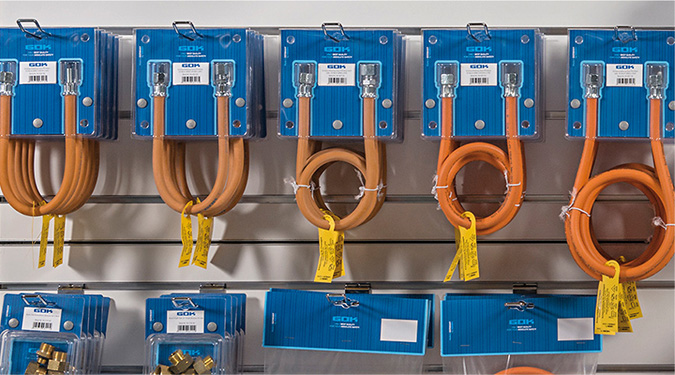
After a while, you take a look at your gas hose and see: It is so worn, porous or simply old that you absolutely have to replace it. You set out to visit the specialist shop, or find information online. In most cases, you can choose between a rubber or plastic hose assembly. But which is the right one?
As the name indicates, the plastic orange hose assemblies for propane and butane are synthetically produced, i.e. chemically produced. The basic material of the GOK hoses is polyvinyl chloride (PVC). In addition to leak-tightness, hose assemblies must meet another important requirement: They must be flexible and easy to bend.

To ensure that a plastic gas hose has this characteristic, so-called plasticizers are included. They make the material smoother, but they reduce some of their function as soon as temperatures drop during camping or barbecuing with gas. Metaphorically: The plastic hose assemblies become as hard as rock and are as flexible as a stair railing.
This stiffness can lead to the hose being kinked when the hose is bent – for example when connecting a barbecue or when replacing the gas cylinder. Cracks due to brittleness and, in the worst case, hose disconnection, would be possible consequences.
Things are different with the rubber hose. Its formula is mixed with rubber – in a sense, a natural plasticizer. The proportion of rubber and other synthetic softeners ensure that the hose assembly remains flexible and smooth even at the lowest temperatures.
Are you wondering up to which low temperatures this is the case? Let’s say it this way: At these temperatures, no one likes to spend their time outdoors and absolutely no one will be firing up the gas barbecue.

Conclusion: neither of these is “better” or “worse” because both versions fulfil their purpose and the standard. However, if you continue your outdoor hobby in late autumn or winter, you should use the gas hose made of rubber. Although it is slightly more expensive to purchase, the added cost is justified by the advantages described regarding handling.
This blog will never ask members of the public or unqualified persons to make changes to or fiddle around with technical systems themselves.
In accordance with the Industrial Safety Regulation (BetrSichV), a qualified person must take care of a system which requires monitoring.
A qualified person is someone who has the specific specialist knowledge required. This knowledge is gained by way of a professional apprenticeship, corresponding professional experience or current occupational activity.
Please note that the texts are based on information, regulations and standards for Germany. Please always check the rules and regulations in the relevant country of destination and consult specialists if necessary.


