At the end of 2019, the BMVI published that proof of a successfully passed gas test for a camper is no longer necessary for passing the general inspection. Of course, this raises the question of whether campers still have to pass the gas test according to G 607 at all, and what it’s like for caravans. We answer all the questions in this article.
Post Views:133
The gas test specifically for motor caravan owners is causing a bit of a splash at the moment. The reason for this is the new guideline for the main inspection (known in Germany as the “HU”) of camping vehicles, passed by the Federal Ministry of Transport and Digital Infrastructure (BMVI). Does this now mean that the gas systems in motor caravans are no longer part of the inspection? And what happens with caravans? We at GOK can clear things up in this article.
Update June 2024
There is finally clarity thanks to a new paragraph in the Road Traffic Licensing Regulations (StVZO). Paragraph 60 “LPG systems in vehicles” now clearly states that LPG systems in motorhomes and caravans must be inspected every two years by an expert in accordance with G 607. The industry association DVFG has clearly summarized all relevant information.
It should be noted that for the vast majority of campers, nothing will change. Despite the unclear legal situation, almost all operators of camping vehicles have been going for their regular gas inspection in the meantime. Why? Because it is a reasonable investment in the long-term safety of the occupants, all road users and all neighbors on the campsite.
This is how it was for motor caravans…
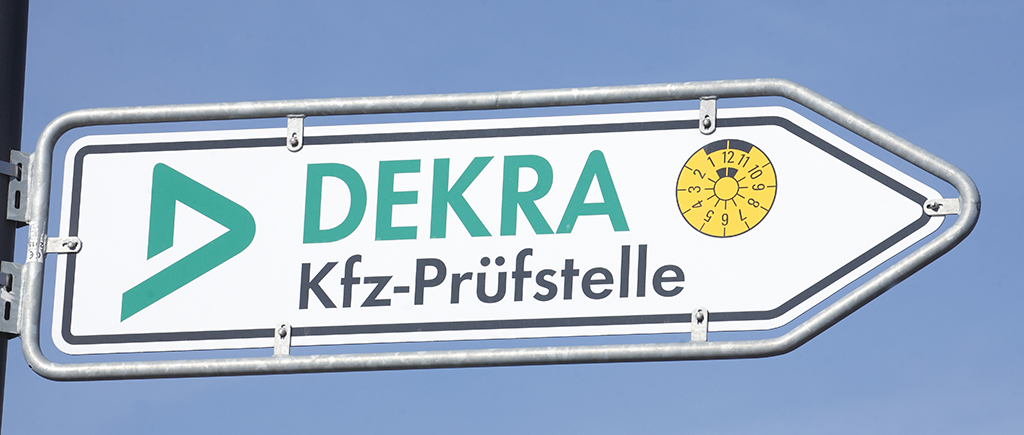
For motor caravans, the regulations were always clear: If the owner cannot present any current test certificate for the gas system during the main vehicle inspection, TÜV and DEKRA complete the inspection with a major fault. For the camper, this means doing the gas test and HU one more time.
This is how it is now for motor caravans!
The BMVI has now revised the general evaluation of faults. According to this revision, the lack of proof of the gas test is no longer viewed as a major fault. In theory, TÜV and DEKRA can now issue a new badge for the main vehicle inspection of the motor caravan. And this is even the case if the owner hasn’t had a gas test carried out for years and – in the worst case – the gas system is no longer safe. But, as we said, this is just the theory.
As a justification for this U-turn regarding the evaluation of faults, the BMVI states that the measuring devices which were previously used for the gas test did not meet the requirements of the HU directive. The plan now is to have described the requirements for the measuring devices and examiners in more detail by 2023. Until then, it is nominally the case that in a passing inspection result for a motor caravan, the owner is released from the obligation to prove that the gas system is safe according to G 607.
Previously, this was the case for motor caravans: If you couldn’t prove a valid gas test according to G 607 during the main vehicle inspection, you would not receive a test badge. This has now changed – until 2023.
Mandatory documentation
However in turn, this does not mean that the gas system will remain left out of the inspection completely. If the gas system has a fault, the HU examiner will also record this. As soon as the fault is written in black and white and the camper ignores this, their insurance protection starts to look quite doubtful.
Especially in such high temperatures, campers should always stay on the safe side when it comes to the functionality of the gas system. This is why GOK still recommends going and having the gas test carried out every two years according to G 607.
A risky game
And on the subject of insurance… Even if passing the main vehicle inspection no longer requires proof of a successful G 607 test, the worksheet G 607 still prescribes the gas test be carried out after two years at the latest. And this is also the stipulation for insurance.
That means that successfully passing the G 607 test is hugely important for your insurance protection to remain valid. To put it in plain language for campers: If in the future you neglect to take the gas test when it’s due, you risk not having any insurance protection.
Update 14 August 2020
Some time ago, TÜV SÜD published a clear statement on their website in the FAQs section (please scroll to the block of questions “QUESTIONS ABOUT THE MAIN VEHICLE INSPECTION (HU) OF MOTOR CARAVANS, CARAVANS AND TRAILERS”):
Here’s an important excerpt using the same wording: “At the time of the HU, there must still be a valid gas test, or the gas test may also be carried out by TÜV SÜD together with the HU.”
That means that, unlike the theory we described at the beginning based on the stipulations of the BMVI, TÜV SÜD do things differently in practice and only issue a valid HU badge if the owner can prove that the gas test was successfully passed.
And what about caravans?
Let’s take a look at the caravan gas test. For trailers, it has long been the case that if a gas test was not carried out or not passed, this was counted as a “minor fault“. So, you also got your test badge even if the gas system hadn’t been inspected by a specialist for many years.
Apart from the fact that GOK definitely does not support this practice and views it as very risky, the majority of campers still take their caravans in for regular gas tests. Why? First, let’s think about how many campers exercise common sense and simply weigh up the risks.
No gas test means potentially undetected dangers when using the gas system. For a modest financial expense, you can have safety and assurance, thanks to the G 607 specialist.
For caravans, the main vehicle inspection and gas test are now separate. However, the majority of campers still take their caravan for a gas test – and for good reasons.
Update 14 August 2020
From a statement made by TÜV SÜD to well-known magazine Camping, Cars & Caravans, we can clearly see that the gas test is mandatory for caravans as well. A decisive excerpt: “The owner is therefore informed that no HU will be carried out without an inspection of the gas system.”
People who aren’t satisfied with safety for themselves, their loved ones and other people might be convinced by the argument about a lack of insurance protection. As it will be with the motor caravan, it is already the case with the caravan: If you drive without valid proof of the proper working order of the gas system, you risk losing the insurance protection of the vehicle.
In addition, campers may also find that they are not even allowed to park at their preferred campsites without proof of the gas test. Some site owners are now paying more attention to the test certificate. They have made it a condition for even crossing the threshold of the campsite – no matter whether it’s a motor caravan or a caravan.
At many campsites it has now become mandatory to present a valid G 607 gas test to be able to park motor caravans and caravans on the property.
On the subject, no matter whether motor caravan or caravan: According to the EU directive 2014/45/EU dated 03 April 2014, gas system testing is prescribed and therefore a stipulated component of the main vehicle inspection. And this EU directive applies to both motor vehicles and motor vehicle trailers, which means: For motor caravans and caravans!
Einschätzung von GOK und betroffener Stellen
In our opinion, most campers are very responsible and know that handling the source of energy LPG is not dangerous, provided you observe certain rules and act on your common sense.
But if you’re delighted about the news for motor caravans and the prospect of saving around 50 euros for the gas test every two years, you’re making savings where you shouldn’t. Even then, we don’t think that in the years to come there will be a large number of “ticking time bombs” driving around. However: Even an accident caused by a lack of care or poor decisions when it comes to saving money can have severe consequences in front of the judge.
In our opinion, the independent travel and motor caravanning blog Campofant has summarised the situation very well. A clear reading recommendation (only in German): https://campofant.com/gaspruefung-wohnmobil-wohnwagen/.
The articles are written by specialist authors in the fields of LPG, fuel oil, liquid media, tank management and safety engineering, who contribute their expertise from product management, development, technical customer support, training and standardisation activities.
The members of the editorial team have many years of practical experience in the planning, application and further development of technical solutions for the safe supply of LPG and liquid fuels. Several authors are actively involved in specialist committees and working groups of the DVGW, DVFG and figawa, as well as in national and European standardisation committees. The team includes, among others, experts certified in accordance with G 607 and G 608, competent persons in accordance with the TRF, and specialists who contribute to the development and evaluation of technical regulations and industry standards.
In addition to providing information about GOK products and solutions, the editorial team focuses on sharing knowledge relating to safety, regulations, maintenance, operation and future technologies in the field of LPG and liquid media.
Share this post
Related articles
How do I find a specialist according to G 607 or G 608 for the gas test?
Camping & Leisure
What products does the GOK Caramatic line include?
Camping & Leisure, Camping & Leisure, Safety
When do I have to replace LPG components in my motorhome or caravan?
Camping & Leisure
Can I replace the MonoControl CS or DuoControl CS from Truma with products from the Caramatic line from GOK after ten years?
Camping & Leisure
You might also find this interesting
How can I use several LPG cylinders in the caravan, motor caravan or on the boat at the same time?
Camping & Leisure
How does a PRV pressure relief valve work?
Camping & Leisure, Home & Commercial, Safety
Which pressure regulator do I need for which output?
Camping & Leisure, Grill & BBQ, Home & Commercial
Are there any differences in the gas test of mobile homes or caravans and motor caravans?
Camping & Leisure
How do I know when I need to replace the components of my LPG system?
Camping & Leisure, Grill & BBQ, Home & Commercial
Where can I find operating manuals for GOK products?
Camping & Leisure, Grill & BBQ, Home & Commercial, Tank & Liquid Media
From what length of hose assembly do I need an excess flow device?
Camping & Leisure, Grill & BBQ, Home & Commercial
Which pressure regulator connections exist for LPG cylinders in Europe?
Camping & Leisure, Grill & BBQ, Home & Commercial
Does the pressure regulator gauge show the filling level of the LPG cylinder?
Camping & Leisure, Grill & BBQ, Home & Commercial
How do I carry out a simplified leak check on an LPG cylinder system?
Camping & Leisure, Grill & BBQ, Home & Commercial
How do I identify the year of manufacture of a pressure regulator from GOK?
Camping & Leisure, Grill & BBQ, Home & Commercial
How do I find out whether the nominal pressure on the pressure regulator and gas equipment match?
Camping & Leisure, Grill & BBQ, Home & Commercial
This blog will never ask members of the public or unqualified persons to make changes to or fiddle around with technical systems themselves.
In accordance with the Industrial Safety Regulation (BetrSichV), a qualified person must take care of a system which requires monitoring.
A qualified person is someone who has the specific specialist knowledge required. This knowledge is gained by way of a professional apprenticeship, corresponding professional experience or current occupational activity.
Please note that the texts are based on information, regulations and standards for Germany. Please always check the rules and regulations in the relevant country of destination and consult specialists if necessary.